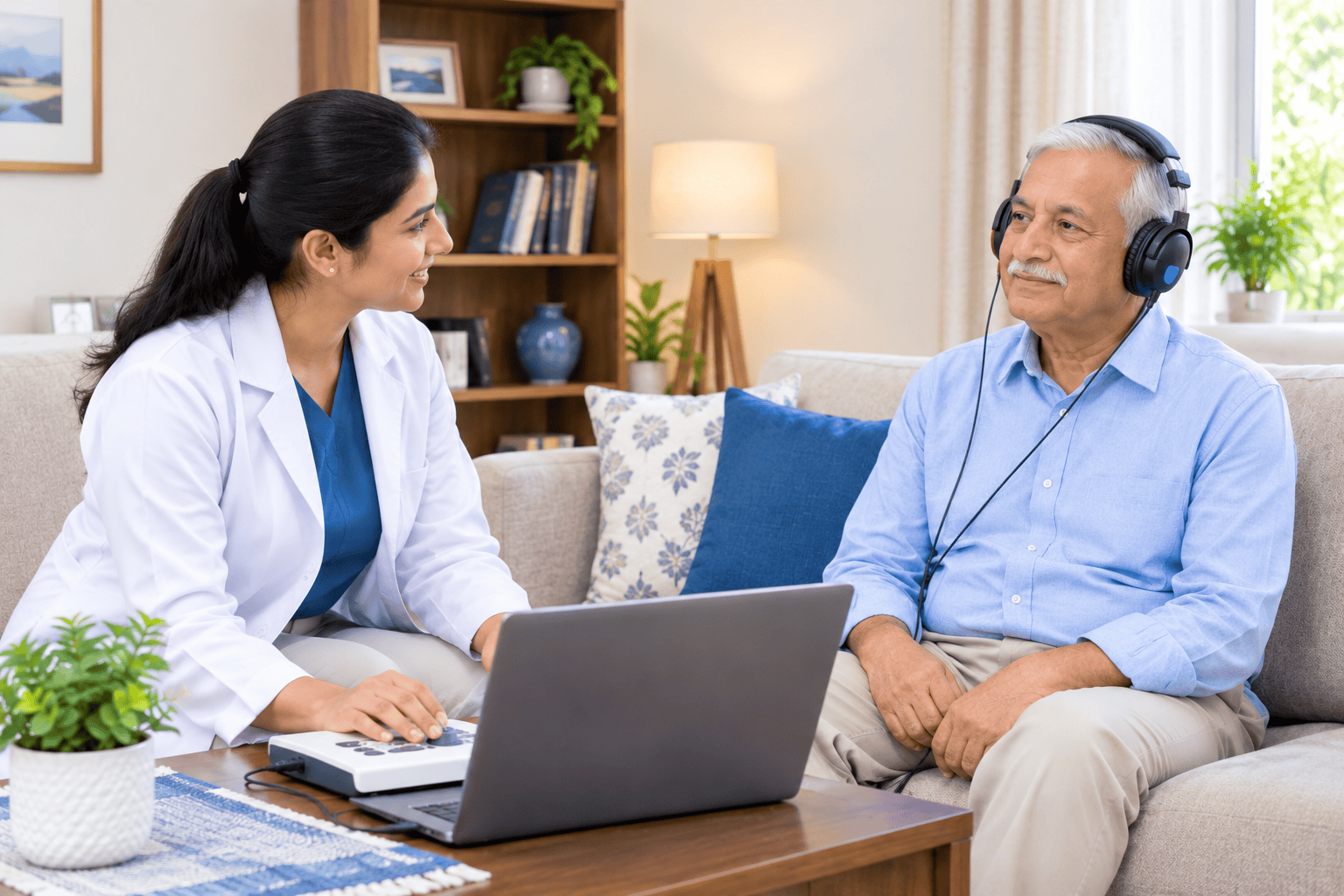
Yes, a hearing test at home can be a convenient option for people who find it difficult to visit a hearing clinic. Instead of travelling to a clinic, you may be able to have a hearing professional visit your home and carry out an appropriate hearing assessment in a comfortable and familiar environment.
For older adults, people with mobility difficulties, busy working professionals, families with children, or anyone who prefers doorstep services, home-based hearing care can make the process easier.
Hear At Home provides hearing care services across Sirsa, Hisar, Rohtak, Hanumangarh and Bathinda, helping individuals access hearing-related services closer to where they live.
But what exactly happens during a hearing test at home? Is it the same as visiting a clinic? What equipment is used? How should you prepare?
This guide explains what you can generally expect from a home hearing assessment and when you may need further evaluation at a clinical facility.
What Is a Hearing Test at Home?
A hearing test at home is a hearing assessment performed at your residence by a qualified hearing professional, depending on the service available in your area and the individual’s requirements.
The purpose is to understand how well you hear different sounds and whether you may need further hearing evaluation or hearing care.
A home appointment can also make the process more comfortable for people who feel nervous about visiting a clinic.
During a home hearing test, the audiologist or hearing professional may discuss your hearing concerns, ask about situations where you have difficulty hearing and perform suitable hearing assessments using portable equipment.
The exact tests performed can vary depending on the individual’s age, hearing concerns, environment and professional assessment.
Why Choose a Home Hearing Assessment?
There are several practical reasons why someone may prefer a hearing assessment at home, including:
Convenience of not travelling to a clinic
A familiar and comfortable environment
Easier access for older adults
Helpful for people with mobility limitations
Convenient for families and caregivers
Reduced travel time
Easier appointment planning for busy individuals
A home service does not mean that every hearing condition can be fully assessed without additional clinical testing. The hearing professional can determine whether further evaluation is appropriate.
How Does a Hearing Test at Home Work?
If you have never had a hearing test at home before, the process may seem unfamiliar. In most cases, the appointment follows a simple and organised process.
1. Discussing Your Hearing Concerns
The first step is usually a conversation about your hearing.
The hearing professional may ask questions such as:
When did you first notice difficulty hearing?
Do you struggle to follow conversations?
Is it difficult to hear when several people are talking?
Do you often increase the volume of your television or phone?
Do you have difficulty hearing certain voices?
Have you previously used hearing aids?
These questions help the professional understand your concerns and decide which assessments may be suitable.
2. Checking the Listening Environment
One important part of a home hearing assessment is identifying a suitable location for testing.
A hearing assessment requires an environment where unnecessary background noise is limited as much as reasonably possible.
The professional may select a quieter room away from television, loud appliances, traffic-facing windows or other sources of noise.
The quality and suitability of a home assessment can depend partly on the testing environment.
3. Performing Appropriate Hearing Tests
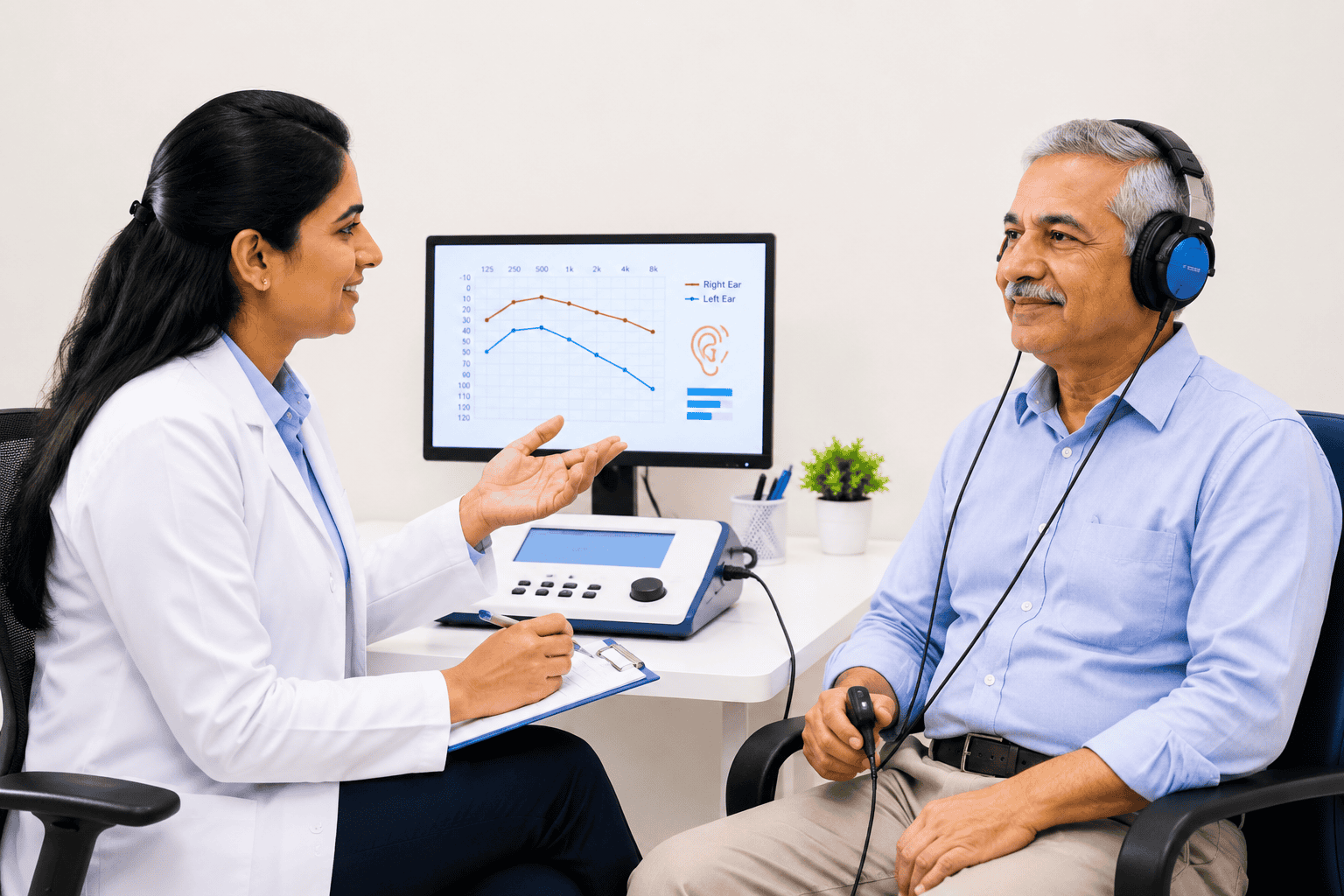
Depending on the appointment and equipment available, the professional may perform one or more hearing assessments.
You may be asked to listen carefully to different sounds and respond when you hear them.
Portable audiological equipment can be used for appropriate assessments during a hearing test at doorstep service.
The exact procedure depends on your hearing needs and the professional’s assessment.
4. Discussing the Results
After the assessment, the hearing professional can explain what the results indicate in simple language.
You can ask questions about your hearing levels, communication difficulties and possible next steps.
If hearing support or further assessment is recommended, the professional can explain the available options.
Is a Hearing Test at Home as Good as a Clinic Test?
This is an important question.
A hearing test at home can be useful and convenient, but the suitability of home testing depends on the type of assessment required and the environment in which it is performed.
A clinic or hospital may have specialised facilities and equipment designed for specific diagnostic assessments. Some situations may therefore require further testing in a controlled clinical environment.
For many people, however, a home-based hearing assessment can be a practical first step for understanding their hearing concerns.
The best approach is to allow the hearing professional to assess your situation and recommend whether additional testing is needed.
Who Can Benefit from a Hearing Test at Home?
A home hearing service may be particularly convenient for people who find travelling difficult or prefer an appointment at their residence.
Senior Citizens
Older adults may find travelling to a clinic inconvenient, particularly when a family member or caregiver needs to accompany them.
A hearing test at home allows the assessment to take place in a familiar environment.
People with Mobility Difficulties
Individuals who have difficulty walking, travelling or using public transport may appreciate a doorstep hearing service.
A home appointment can reduce the need for unnecessary travel.
Busy Working Professionals
People with demanding work schedules may find it easier to arrange a home hearing test at a convenient time rather than spending additional time travelling to and from a clinic.
Families
Parents or family members arranging hearing care for someone at home may prefer a home-based appointment where practical.
People Who Prefer Doorstep Services
Some people simply feel more comfortable receiving services at home. For them, a hearing test at home can provide a convenient alternative to a traditional clinic visit, where appropriate.
How Should You Prepare for a Home Hearing Test?
You usually do not need complicated preparation for a home hearing test, but a few simple steps can help make the appointment smoother.
Choose a Quiet Room
Select a room that is as quiet as reasonably possible.
Turn off the television and avoid unnecessary background noise during the assessment.
Keep Your Hearing History Ready
If you have previous hearing test reports, hearing aid details or other relevant records, keep them available for discussion.
Make a List of Your Concerns
Think about situations where you have difficulty hearing.
For example, you may notice problems during telephone conversations, family discussions, television viewing or conversations in noisy places.
Sharing these details can help the hearing professional understand your concerns.
Have a Family Member Available
If possible, having a family member or caregiver present can be helpful, especially for an older person.
They may be able to share observations about communication difficulties and help understand the recommendations after the appointment.
What Happens After the Hearing Test?
The next step depends on the assessment results and your individual hearing needs.
The hearing professional may explain whether your hearing appears to require further evaluation or whether hearing care should be considered.
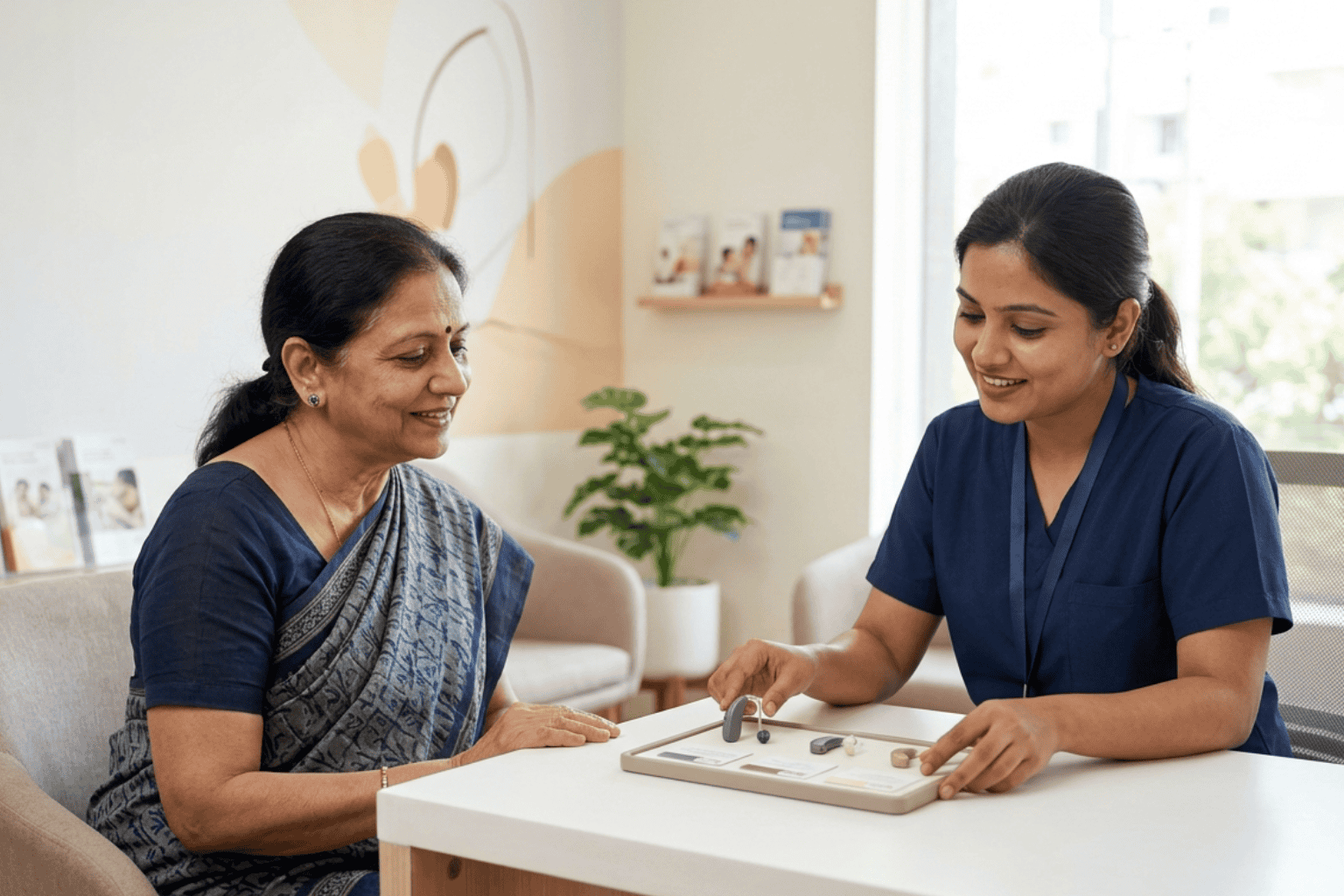
If hearing aids are recommended, the professional can discuss suitable options based on your hearing needs, lifestyle and preferences.
It is important not to select a hearing aid simply because it is popular or expensive. Hearing aid selection and fitting should be based on appropriate hearing assessment and professional guidance.
If additional medical or diagnostic evaluation is required, you may be advised to consult an appropriate healthcare professional or visit a suitable clinical facility.
Can Hearing Aids Be Discussed During a Home Appointment?
Yes, hearing aids can be discussed as part of hearing care when appropriate.
If your assessment indicates that hearing support may be useful, the professional can explain different hearing aid options and how they may fit into your daily routine.
For example, your needs may be different if you mainly:
Have conversations with family members
Use the telephone frequently
Attend social gatherings
Spend time in busy environments
Watch television regularly
Need support for everyday communication
The aim should be to find an appropriate hearing solution based on your individual requirements rather than choosing a device based only on price or appearance.
Hearing Test at Home vs Clinic Visit
Both home and clinic appointments can have their place in hearing care.
| Hearing Test at Home | Clinic-Based Assessment |
|---|---|
| Convenient for people who prefer doorstep services | Requires travel to the clinic |
| Takes place in a familiar environment | Takes place in a controlled clinical environment |
| Can be helpful for people with mobility difficulties | Access to specialised clinical facilities may be available |
| Portable equipment may be used where appropriate | Wider range of diagnostic equipment may be available |
| Suitable assessments depend on the situation | Can be appropriate when detailed clinical testing is required |
The right option depends on the person’s hearing concerns, mobility, location, required assessment and professional recommendation.
When Should You Consider a Hearing Assessment?
You may consider a hearing assessment if you regularly notice difficulty understanding conversations or hearing sounds clearly.
Some common situations include:
Frequently asking people to repeat themselves
Difficulty following conversations
Increasing television volume regularly
Struggling to hear on the telephone
Finding conversations difficult in noisy environments
Family members mentioning that you may not be hearing clearly
Feeling that some people speak too softly
These signs do not automatically indicate a particular medical condition. A hearing assessment can help provide more information about your hearing.
Hearing Test at Home in Sirsa, Hisar, Rohtak, Hanumangarh and Bathinda
For people searching for a hearing test near me, accessibility can be an important consideration.
Hear At Home provides hearing care services across Sirsa, Hisar, Rohtak, Hanumangarh and Bathinda.
Hearing Test at Home in Sirsa
Residents of Sirsa can explore home-based hearing services when travelling to a clinic is inconvenient. A doorstep appointment can make hearing care more accessible for senior citizens, adults and families.
Hearing Test at Home in Hisar
For individuals and families in Hisar, a home hearing assessment can be a convenient way to begin addressing hearing concerns without making an unnecessary clinic journey.
Hearing Test at Home in Rohtak
People in Rohtak who prefer doorstep healthcare services may consider a home hearing appointment, subject to service availability and the suitability of the assessment.
Hearing Test at Home in Hanumangarh
For residents of Hanumangarh, home-based hearing care can offer a convenient option for people who find travelling difficult or prefer professional services at home.
Hearing Test at Home in Bathinda
Residents of Bathinda can also explore home hearing services for convenient access to hearing assessment and hearing care.
For all locations, appointment availability and the type of assessment provided should be confirmed before scheduling.
Why Choose Hear At Home?
Hear At Home focuses on making hearing care more accessible and convenient for individuals and families.
A home appointment can be particularly useful when travelling to a clinic is difficult or when someone prefers to discuss their hearing concerns in a familiar environment.
The service covers:
Hearing tests and assessments
Hearing consultations
Hearing aid guidance
Hearing aid fitting and support
Home-based hearing care
Doorstep hearing services
The appropriate service depends on your individual hearing needs and the professional assessment.
Final Thoughts
A hearing test at home can be a convenient way to take the first step towards understanding your hearing, especially if travelling to a clinic is difficult or you prefer doorstep services.
The process generally involves discussing your hearing concerns, selecting a suitable testing environment, performing appropriate hearing assessments and explaining the results and possible next steps.
Remember that every person’s hearing needs are different. A home assessment may be suitable in many situations, while some individuals may need further testing in a clinical setting.
If you are looking for convenient hearing care in Sirsa, Hisar, Rohtak, Hanumangarh or Bathinda, Hear At Home can help you explore suitable hearing assessment and hearing care services.
Ready to take the next step? Contact Hear At Home to ask about home-based hearing services and appointment availability in your area.