Hearing plays an important role in our everyday lives. From having conversations with family members to listening to the television, answering phone calls and communicating with people around us, good hearing helps us stay connected. However, many people gradually experience difficulty hearing without immediately recognising the problem.
If you or someone in your family frequently asks others to repeat themselves, struggles to understand conversations in crowded places or keeps increasing the television volume, it may be time to consider a professional hearing evaluation.
But what if visiting a hearing clinic is difficult because of age, mobility issues, a busy schedule or other personal reasons? This is where a home hearing assessment can make hearing care more convenient.
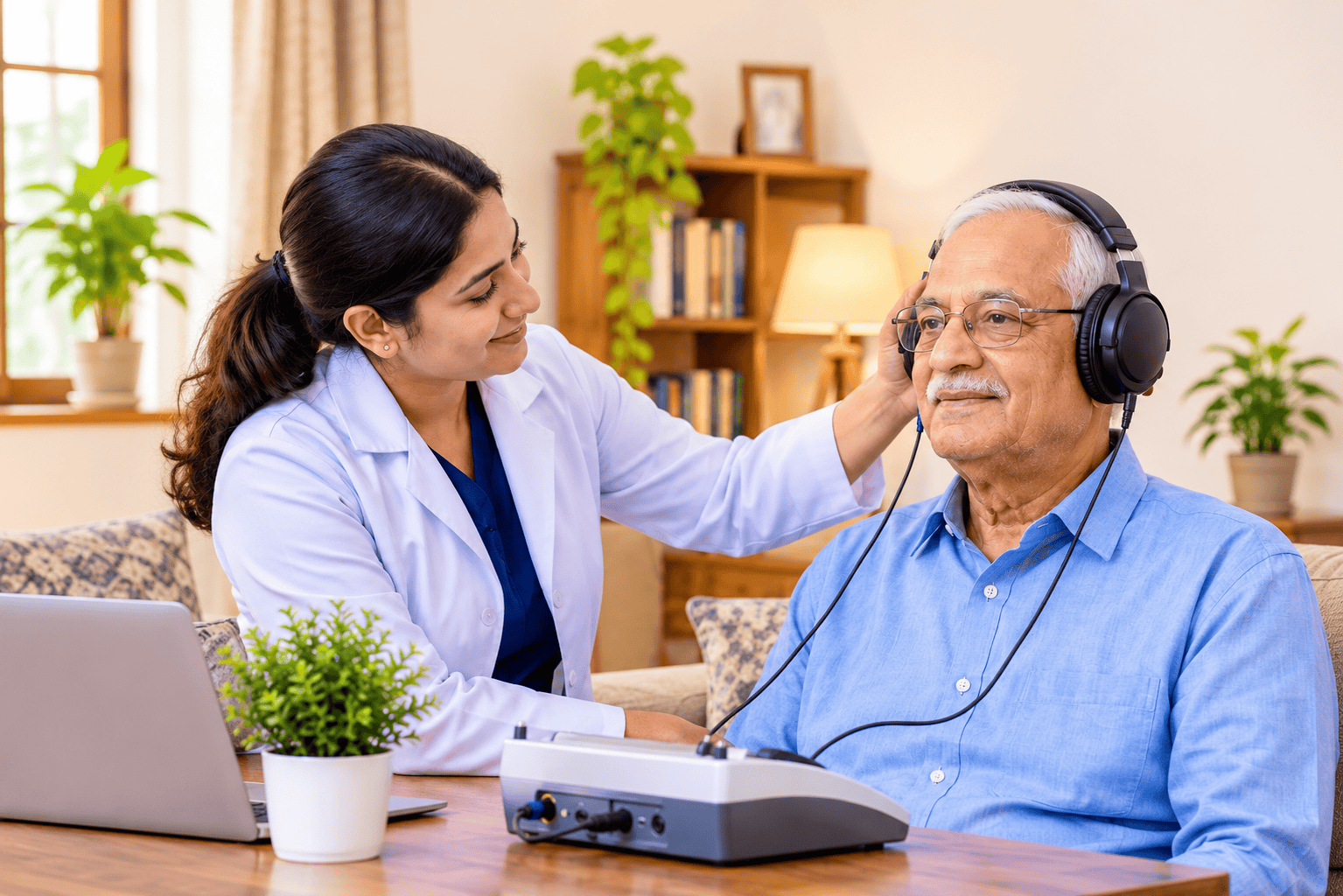
A home hearing assessment allows individuals to get their hearing evaluated in a familiar environment without necessarily travelling to a clinic. With appropriate equipment and professional guidance, an audiologist can assess hearing ability, explain the findings and suggest suitable next steps.
In this guide, we will explain how a home hearing assessment works, what happens during the appointment, who can benefit from it and how you can prepare for your hearing evaluation.
What Is a Home Hearing Assessment?
A home hearing assessment is a hearing evaluation conducted at an individual’s residence by a qualified hearing professional or audiologist, depending on the service arrangement.
Instead of travelling to a hearing care centre, the individual can receive an assessment at home. The professional uses suitable hearing assessment equipment and testing procedures to understand how well the person responds to different sounds.
The purpose of a home hearing assessment is to identify possible hearing difficulties and understand whether further evaluation or hearing care may be required.
The assessment may include:
Discussion about hearing difficulties and daily listening challenges.
Questions about medical and hearing history.
Basic examination of the ears, where appropriate.
Hearing tests using suitable equipment.
Evaluation of responses to different sound frequencies.
Explanation of the assessment findings.
Guidance about possible next steps.
The exact tests performed may depend on the person’s age, hearing concerns, available equipment and the type of assessment being offered.
For many families, this approach makes professional hearing care more accessible, especially when arranging travel to a clinic is challenging.
How Does a Home Hearing Assessment Work?
Understanding the process can help remove uncertainty and make the appointment more comfortable.
Although the exact procedure may vary, a professional home hearing assessment generally follows several steps.
1. Booking a Home Hearing Assessment
The first step is scheduling an appointment with a hearing care provider.
During the booking process, you may be asked about:
The age of the person requiring the assessment.
Whether the hearing difficulty affects one or both ears.
How long the hearing concerns have been present.
Whether there is difficulty understanding conversations.
Any history of hearing problems or previous hearing tests.
Your preferred appointment time and location.
Sharing these details helps the professional understand your concerns before the appointment.
If you are arranging a home hearing assessment for an elderly parent, it is helpful to mention any mobility limitations or other requirements.
Once the appointment is confirmed, you can prepare a comfortable space for the assessment.
2. Understanding the Hearing and Medical History
When the hearing professional arrives, the process generally begins with a conversation.
This discussion is important because hearing difficulties can affect people differently.
For example, one person may hear sounds but struggle to understand speech, while another may find it difficult to hear softer sounds.
The audiologist may ask questions such as:
Do you frequently ask people to repeat themselves?
Do you find conversations difficult in noisy surroundings?
Do you struggle to hear people speaking from another room?
Do you need to increase the television volume?
Do you experience ringing or buzzing sounds in your ears?
Do you find phone conversations difficult?
Have you noticed any changes in your hearing recently?
The professional may also ask about previous ear infections, exposure to loud noise, existing medical conditions and earlier hearing evaluations.
This information helps build a clearer understanding of the person’s hearing concerns.
3. Examination of the Ears
Depending on the assessment arrangement, the professional may examine the outer ear and ear canal using an appropriate examination instrument, such as an otoscope.
This examination may help identify visible concerns such as:
Excessive earwax.
Irritation in the ear canal.
Visible blockage.
Other noticeable ear-related abnormalities.
An ear examination is useful because certain conditions can affect hearing and may require medical attention.
However, an examination of the ear alone cannot determine a person’s complete hearing ability.
If there are signs of an ear-related medical problem, consultation with an ENT specialist may be recommended.
4. Conducting the Hearing Test
This is one of the most important stages of a home hearing assessment.
The professional uses suitable hearing assessment equipment to evaluate how the person responds to different sounds.
Depending on the equipment and testing environment, the evaluation may include pure-tone audiometry or other appropriate hearing tests.
During a pure-tone hearing test, the individual generally wears headphones and listens to sounds at different pitches and volumes.
The person is asked to indicate whenever they hear a sound.
For example:
A soft sound may be played in one ear.
The individual indicates when they hear it.
The sound level may be adjusted.
Different sound frequencies are tested.
The procedure may be repeated for the other ear.
These responses help establish the softest sounds a person can hear at different frequencies under the test conditions.
A home hearing assessment should be conducted in a suitably quiet environment. Background noise can affect test results, so the professional must consider the testing conditions and equipment limitations.
Some assessments may also include speech testing to understand how clearly a person recognises spoken words.
5. Understanding the Hearing Test Results
After completing the tests, the professional reviews the findings.
One commonly used document is called an audiogram.
An audiogram is a graph that displays hearing thresholds at different sound frequencies for each ear.
It helps the audiologist understand:
Which sound frequencies are difficult to hear.
Whether hearing sensitivity differs between the ears.
The degree of hearing difficulty, where applicable.
Whether additional evaluation may be needed.
The results are explained in simple language so that individuals and family members can understand what they mean.
A professional home hearing assessment is not just about conducting a test. Understanding the results is equally important.
If the findings suggest possible hearing loss, the audiologist may discuss suitable hearing care options or recommend an ENT consultation for further evaluation.
6. Receiving Guidance and Recommendations
Once the results have been reviewed, the next step is discussing the available options.
Recommendations depend on the individual’s hearing needs and assessment findings.
These may include:
Further hearing evaluation.
Consultation with an ENT specialist.
Monitoring hearing changes.
Advice about hearing protection.
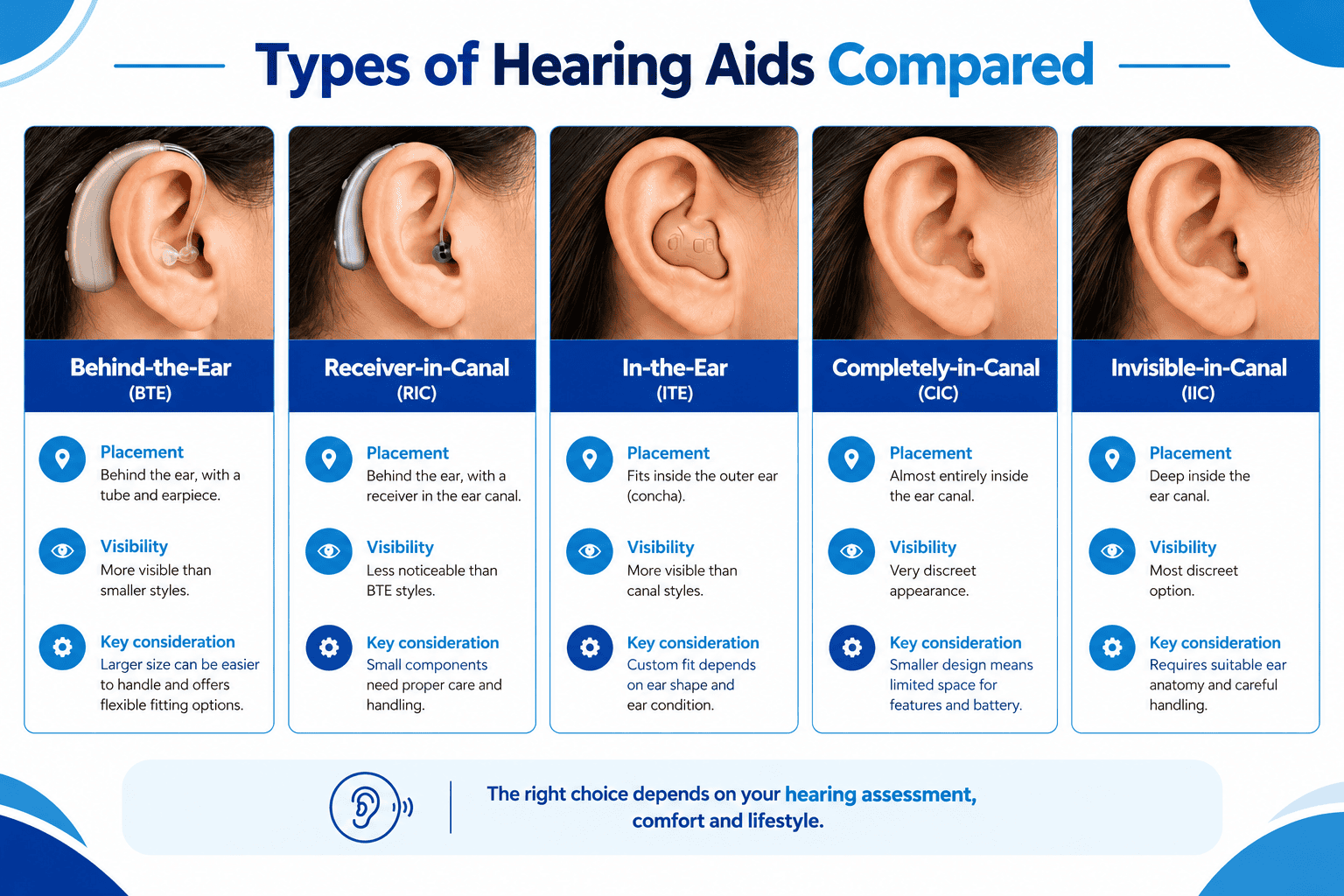
Discussion about suitable hearing aids, where appropriate.
Follow-up hearing assessments.
It is important to remember that hearing aids are not automatically required after every assessment.
The right approach depends on the person’s individual hearing profile, lifestyle, communication needs and professional evaluation.
A home hearing assessment helps individuals understand their hearing better and make informed decisions about their next steps.
What Equipment Is Used During a Home Hearing Test?
People often wonder whether a hearing test conducted at home can involve professional equipment.
The equipment used depends on the type of assessment being provided.
Some commonly used instruments include:
1. Audiometer
An audiometer is an instrument used for measuring hearing thresholds at different sound frequencies and intensities.
It plays specific sounds through headphones or other appropriate transducers.
The individual’s responses help the professional assess hearing sensitivity.
2. Headphones or Earphones
Specialised headphones or insert earphones may be used to deliver test sounds to individual ears.
The type of transducer depends on the equipment and assessment procedure.
3. Otoscope
An otoscope is an instrument used to examine the ear canal and visible part of the eardrum.
It can help identify certain visible ear-related concerns.
4. Speech Testing Materials
Some hearing evaluations include speech testing to understand how well a person recognises spoken words.
The exact materials and procedures depend on the type of test being conducted.
The use of appropriate equipment, proper calibration and suitable testing conditions is important for obtaining meaningful results.
Who Should Consider a Home Hearing Assessment?
A home hearing assessment can be helpful for different age groups and individuals with different hearing concerns.
Here are some situations in which arranging an assessment at home may be worth considering.
1. Senior Citizens
Older adults may gradually experience changes in hearing.
They may find it difficult to follow conversations, hear television programmes or communicate comfortably over the phone.
For senior citizens who find travelling difficult, a home hearing assessment can provide a more convenient way to access an initial professional evaluation.
Family members can also participate in the discussion and better understand the person’s hearing concerns.
2. People with Mobility Difficulties
Individuals with mobility limitations may find travelling to a hearing clinic challenging.
A home hearing test can reduce the need for travel, depending on service availability and the suitability of the home environment.
3. People Experiencing Communication Difficulties
If someone regularly misunderstands conversations, struggles in noisy environments or frequently asks others to repeat themselves, a professional hearing evaluation may help identify possible hearing difficulties.
4. Busy Working Professionals
Work schedules and personal commitments sometimes make it difficult to arrange clinic visits.
A home hearing assessment may offer greater scheduling convenience, subject to appointment availability.
5. Families Concerned About an Elderly Member
Family members are often the first to notice changes in a person’s hearing.
If an elderly parent keeps increasing the television volume or has difficulty responding during conversations, arranging a hearing evaluation can be a useful first step.
What Are the Benefits of a Home Hearing Assessment?
There are several practical reasons why people prefer getting their hearing checked at home.
Convenience and Comfort
One of the biggest advantages is convenience.
Individuals can receive an assessment without having to travel to a clinic, provided the service is available in their location.
Being in familiar surroundings may also help some individuals feel more relaxed during the appointment.
Helpful for Elderly Individuals
Senior citizens may find frequent travel tiring or uncomfortable.
A home hearing assessment can make the evaluation process easier for elderly individuals and their families.
Family Involvement
Hearing difficulties often affect the entire family.
When an assessment takes place at home, family members may find it easier to participate in the discussion, understand the results and support the individual with future decisions.
Personalised Attention
A home appointment can provide an opportunity to discuss individual listening challenges and daily communication needs.
This can help the hearing professional understand the person’s concerns more clearly.
Better Awareness of Hearing Health
Many people postpone hearing evaluations because they are unsure about the process.
Learning about hearing ability through a professional assessment can help individuals understand whether further attention is needed.
However, a home hearing assessment is not automatically equivalent to every type of diagnostic evaluation performed in a specialised clinic. Certain conditions and testing requirements may require a clinic-based assessment or medical examination.
How to Prepare for a Home Hearing Assessment
Preparing for your appointment is simple. A few small steps can help make the process smoother.
Here are some useful tips:
1. Choose a quiet room: Select a room away from traffic noise, television sounds, loud appliances and other disturbances.
2. Keep your previous reports ready: If you have undergone a hearing test earlier, keep the reports available for comparison.
3. Prepare your medical history: Share relevant information about ear infections, previous ear treatments or other medical concerns.
4. Make a list of hearing difficulties: Note situations in which you struggle to hear clearly. For example, difficulty hearing on the phone or understanding conversations in groups.
5. Inform family members: If the assessment is for an elderly person, having a family member present can help with communication and understanding the recommendations.
6. Follow the professional’s instructions: Ask whether any preparation is required before the appointment.
These simple steps can help make your home hearing assessment more organised and comfortable.
Home Hearing Assessment in Sirsa, Hisar, Rohtak, Hanumangarh and Bathinda
Access to hearing care is important for individuals living in smaller cities and surrounding communities, where travelling to a specialised centre may not always be convenient.
Hear At Home aims to make hearing care more accessible by helping individuals explore convenient hearing assessment options.
If you or a family member is experiencing hearing difficulties, you can enquire about a home hearing assessment in your area.
Home Hearing Assessment in Sirsa
People living in Sirsa and nearby areas may consider a hearing evaluation if they notice difficulty understanding conversations, hearing the television or responding to everyday sounds.
A home-based assessment can be a convenient option for elderly individuals and people who prefer not to travel.
Home Hearing Assessment in Hisar
If you are looking for a home hearing assessment in Hisar, getting your hearing checked can be a useful first step when you notice changes in your listening ability.
Professional guidance can help you understand the findings and whether further testing is required.
Home Hearing Assessment in Rohtak
For families in Rohtak, arranging a hearing evaluation for an elderly parent or another family member can help address hearing concerns.
An at-home appointment may offer additional convenience, subject to service availability.
Home Hearing Assessment in Hanumangarh
Residents of Hanumangarh who experience hearing difficulties can explore professional hearing evaluation options.
A home hearing assessment may be particularly useful for individuals who find travelling to a hearing care centre difficult.
Home Hearing Assessment in Bathinda
Individuals and families in Bathinda can also enquire about convenient hearing care options.
Whether the concern involves difficulty following conversations or frequently increasing the television volume, a professional hearing evaluation can help identify possible hearing difficulties.
Note: Home visit availability, appointment slots and the types of hearing tests offered may vary by location. Contact Hear At Home to confirm service availability in your area.
When Should You Consult an ENT Specialist?
A hearing assessment can help identify possible hearing difficulties, but some symptoms require medical evaluation.
You should seek advice from an ENT specialist if you experience:
Sudden hearing loss in one or both ears.
Ear pain or persistent discomfort.
Fluid or discharge from the ear.
Persistent ringing or buzzing sounds.
Recurrent ear infections.
Dizziness or balance-related symptoms.
Sudden hearing loss should be treated as urgent. Seek immediate medical attention rather than waiting for a routine home hearing appointment.
An ENT specialist can evaluate possible medical causes and recommend appropriate treatment or further testing.
Take the First Step Towards Better Hearing Awareness with Hear At Home
Hearing difficulties can gradually affect communication, relationships and everyday activities. Unfortunately, many people delay getting their hearing checked because they believe the process will be complicated or inconvenient.
A home hearing assessment offers a convenient way to explore your hearing concerns without necessarily having to travel to a clinic.
Whether you are arranging an assessment for yourself, your parents or another family member, understanding the process can help you make a more informed decision.
At Hear At Home, we believe that understanding your hearing needs is an important first step towards better hearing care.
If you have noticed signs of hearing difficulty or want to arrange an evaluation for an elderly family member, get in touch with Hear At Home.
Visit https://hearathome.in/ to enquire about available hearing assessment services and appointment options in Sirsa, Hisar, Rohtak, Hanumangarh, Bathinda and nearby areas.
Don’t ignore the signs of hearing difficulty. Take the first step towards understanding your hearing today.