
Best Hearing Aid Near Me: How to Choose the Right Hearing Aid
The best hearing aid near me is not necessarily the smallest, most expensive or most technologically advanced device. The right hearing aid is the one that matches your hearing loss, daily listening needs, comfort preferences, lifestyle and professional hearing assessment.
If you or a family member is experiencing difficulty understanding conversations, frequently asking people to repeat themselves, increasing the television volume or struggling to hear in noisy environments, a professional hearing assessment is an important first step.
Hear At Home provides professional hearing assessments, hearing aid fitting, home visits, tinnitus support, OAE and BERA/ASSR testing, and hearing aid repair and maintenance services.
But how do you actually decide which hearing aid is right for you?
Let’s look at the factors that matter most.
What Is the Best Hearing Aid?
The best hearing aid is the device that is appropriately matched to your hearing loss, lifestyle, listening environments, comfort requirements and technology preferences.
There is no single hearing aid that is ideal for everyone.
For example, someone who mainly needs help with conversations at home may have different requirements from someone who regularly attends meetings, travels, spends time in restaurants or needs help hearing conversations in busy environments.
A professional assessment can help determine the degree and pattern of hearing loss before a hearing aid is selected and fitted.
The most important factors include:
Degree and type of hearing loss
Whether one or both ears are affected
Lifestyle and daily activities
Listening environments
Comfort and device size
Battery or rechargeable preferences
Bluetooth or connectivity requirements
Ease of use
Hearing aid fitting and programming
Trial options
Warranty and maintenance
Ongoing professional support
So, when searching for the best hearing aid near me, don’t focus only on the device. Look at the complete hearing-care service.
Why a Hearing Test Comes First
Before purchasing a hearing aid, your hearing should be properly assessed.
A hearing test helps identify how well you hear different frequencies and sound levels. Depending on your age, symptoms and clinical needs, different hearing assessments may be appropriate.
Hear At Home provides Pure Tone Audiometry (PTA) through certified audiologists, along with other hearing assessments including OAE and BERA/ASSR testing.
A hearing assessment can help answer important questions such as:
How much hearing loss is present?
Is hearing loss present in one ear or both?
Which frequencies are affected?
Is the hearing loss mild, moderate, severe or profound?
Would amplification be useful?
What type of hearing aid may be appropriate?
Are further medical investigations necessary?
This is why buying a device simply because someone calls it the “best hearing aid” may not be the right approach.
A proper hearing assessment gives you a clearer understanding of your hearing needs and helps an audiologist recommend an appropriate solution.
Types of Hearing Aids
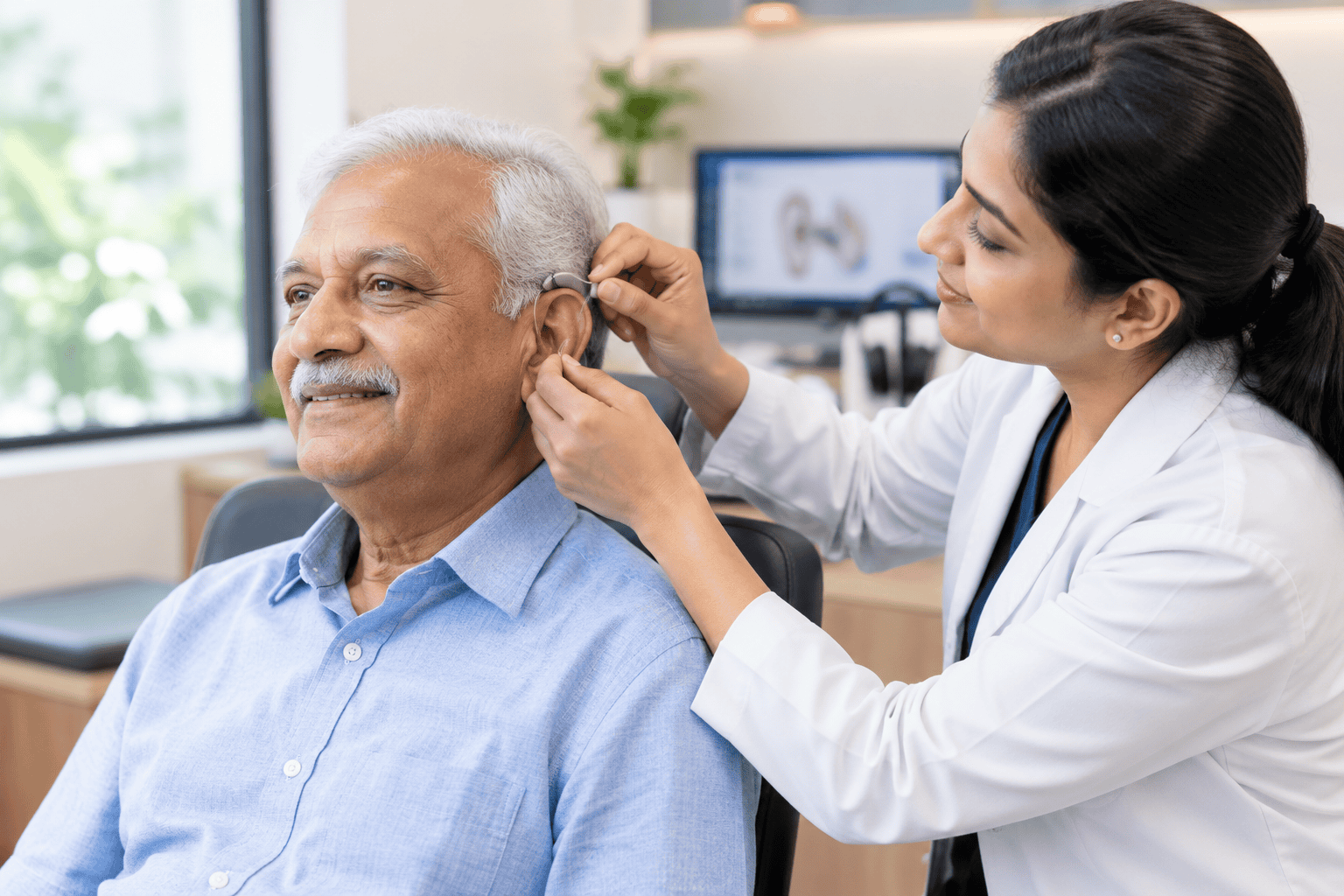
Modern hearing aids come in different styles and configurations. The appropriate style depends on hearing needs, ear anatomy, dexterity, cosmetic preferences and the level of amplification required.
Behind-the-Ear Hearing Aids
Behind-the-ear or BTE hearing aids sit behind or around the ear and are connected to the ear through tubing or another coupling system.
They can be suitable for a wide range of hearing losses and are often considered when more amplification or a robust design is required.
Receiver-in-Canal Hearing Aids
RIC devices place the receiver closer to or inside the ear canal while the main body remains behind the ear.
They are popular because they can provide a relatively discreet design while supporting modern features and personalised fitting.
In-the-Ear Hearing Aids
ITE devices are designed to sit within the outer portion of the ear.
Because they can be customised to the individual’s ear, they may be considered when someone prefers a more integrated design.
In-the-Canal and Smaller Devices
ITC, CIC and similar styles are designed to sit partly or more deeply within the ear canal.
Their smaller size can be attractive to people who prioritise discretion, but the suitability of a smaller device depends on hearing loss, ear anatomy and practical factors.
How to Choose the Best Hearing Aid
Choosing the right device becomes much easier when you evaluate it using practical criteria rather than simply choosing the most expensive model.
1. Start With Your Hearing Loss
The first consideration should always be your hearing profile.
A hearing aid needs to provide appropriate amplification for the hearing loss being treated. A device designed for one level or type of hearing difficulty may not be suitable for another.
Your audiologist can use your hearing test results to guide the selection and programming process.
2. Consider Where You Need to Hear
Think about your everyday listening environments.
Do you mainly need help:
At home?
During conversations?
While watching television?
In restaurants?
At work?
During meetings?
In crowded markets?
While travelling?
When speaking with grandchildren?
Your answers can influence which features are genuinely useful.
3. Consider Comfort
You may wear your hearing aids for many hours each day, so comfort matters.
A device should feel secure without creating unnecessary discomfort. The fitting, ear coupling, physical design and programming can all affect the overall experience.
4. Think About Connectivity
Some modern hearing aids offer wireless connectivity for compatible smartphones, televisions and other devices.
If you frequently make phone calls or stream audio, connectivity may be an important consideration.
However, don’t pay for features you are unlikely to use.
5. Battery or Rechargeable?
Some hearing aids use replaceable batteries while others are rechargeable.
Rechargeable devices can be convenient for people who prefer not to change batteries regularly. Traditional battery-powered devices can also work well for people who prefer that system.
The right option depends on your daily routine and comfort with handling small components.
6. Look at Fitting and Programming Support
A hearing aid is more than a small electronic device.
Its programming should correspond to the user’s hearing profile. Hear At Home provides personalised hearing aid fitting and programming, with ongoing hearing-care support.
This professional support can be especially important for first-time hearing-aid users.
Why Professional Hearing Aid Fitting Matters
Finding a hearing aid is only part of the process.
The device also needs to be fitted and programmed appropriately.
A professional fitting may involve:
Reviewing your hearing test.
Selecting an appropriate hearing aid.
Programming the device.
Checking comfort and sound quality.
Making adjustments based on your feedback.
Explaining how to use and care for the device.
Providing follow-up support.
Personalised fitting and programming can make a significant difference to your experience with a hearing aid.
This is one reason a local hearing-care provider can be more valuable than simply purchasing a device without professional support.
Why “Near Me” Matters When Choosing a Hearing Aid
When someone searches “best hearing aid near me,” they are usually looking for more than a product.
They may need:
A hearing test
An audiologist consultation
Hearing aid recommendations
Device fitting
Programming
Trial support
Repairs
Cleaning and maintenance
Follow-up adjustments
Convenient access
Hearing needs can change over time, and hearing aids may require adjustments or servicing.
That means proximity and ongoing support can matter just as much as the initial purchase.
A nearby hearing-care provider can make follow-up appointments, maintenance and adjustments more convenient.
Best Hearing Aid Near Me in Sirsa
For people searching for the best hearing aid near me in Sirsa, Hear At Home offers hearing-care services designed around professional assessment, fitting and support.
Hear At Home provides hearing testing, personalised hearing aid fitting, home visits, tinnitus support, OAE and BERA/ASSR testing, and hearing aid repair and maintenance services.
Hear At Home also provides home hearing services across Sirsa, Hisar, Bhiwani, Rohtak, Gurugram, Bathinda and Hanumangarh.
Instead of choosing a hearing aid based only on brand or appearance, you can start with an assessment and discuss your specific hearing requirements with a hearing professional.
Hearing Aid Home Visit Services
Not everyone can easily travel to a clinic.
Older adults, people with mobility difficulties and families caring for someone with significant hearing problems may prefer a home-based service.
Hear At Home offers home visits where an audiologist can provide hearing testing, consultation or hearing aid fitting at home.
A home visit can also provide a familiar environment in which to discuss the person’s everyday hearing challenges.
For example, a family member may explain that the person:
Cannot hear conversations from another room.
Frequently increases the television volume.
Struggles to hear family members.
Has difficulty following conversations in groups.
Needs people to repeat themselves.
Has difficulty communicating over the phone.
These real-world examples can help an audiologist understand the user’s practical needs alongside the hearing test results.
Hearing Aid Trial and After-Sales Support
A hearing aid should not be viewed as a one-time purchase.
You may need time to become comfortable with amplified sound and determine whether the device works well in your everyday environments.
That is why trial opportunities, fitting adjustments and after-sales support can be important.
Before choosing a hearing aid provider, ask:
Is a trial available?
Who will fit and program the device?
Can adjustments be made later?
What warranty is provided?
Where can repairs be handled?
Are cleaning and maintenance services available?
What happens if the device doesn’t feel comfortable?
Is ongoing audiologist support available?
These questions can help you compare complete hearing-care services rather than comparing products alone.
When Should You Consider a Hearing Aid?
You may want to consider a professional hearing assessment if you:
Frequently ask people to repeat themselves.
Struggle to understand speech in noisy places.
Turn the television volume higher than others prefer.
Have difficulty hearing on the telephone.
Feel that people are mumbling.
Miss conversations when several people are speaking.
Have difficulty hearing high-pitched sounds.
Avoid social situations because communication has become difficult.
These signs do not automatically mean that you need a hearing aid. Hearing difficulties can have different causes, and some may require medical evaluation or other treatment.
A professional hearing assessment can help determine the appropriate next step.
Conclusion
Finding the best hearing aid near me should begin with your hearing needs, not simply a brand name, price or device size.
The right hearing aid depends on your hearing loss, lifestyle, listening environments, comfort preferences and desired features. Just as importantly, professional fitting, programming, trial support and after-sales care can influence your overall experience.
If you’re in Sirsa or one of Hear At Home’s service areas, you can start by arranging a professional hearing assessment and discussing your requirements with a qualified audiologist.
Hear At Home provides hearing testing, personalised hearing aid fitting, home visits and ongoing hearing-care services.
For reliable hearing care, the goal should not simply be to find the most expensive hearing aid. The goal is to find a solution that helps you hear comfortably and confidently in the situations that matter most.
FAQs
The best hearing aid is the one that matches your hearing loss, lifestyle, comfort needs and listening environments. There is no single model that is best for everyone. A hearing assessment and professional fitting can help identify a suitable option.
Start by searching for a reputable local hearing-care provider that offers professional hearing tests, audiologist consultation, hearing aid fitting, trials and after-sales support. For people in Sirsa and surrounding service areas, Hear At Home provides hearing assessment, fitting and home-visit services.
A professional hearing assessment is strongly recommended before choosing a hearing aid. It helps determine the degree and pattern of hearing loss and allows the audiologist to recommend and programme an appropriate device.
Digital hearing aids offer sophisticated sound processing and can be programmed according to individual hearing needs. However, the “best” device depends on the person's hearing loss, lifestyle and requirements rather than technology alone.
Yes. Hear At Home offers home hearing visits for testing, consultation and hearing aid fitting. Its website lists home hearing services across Sirsa, Hisar, Bhiwani, Rohtak, Gurugram, Bathinda and Hanumangarh.