
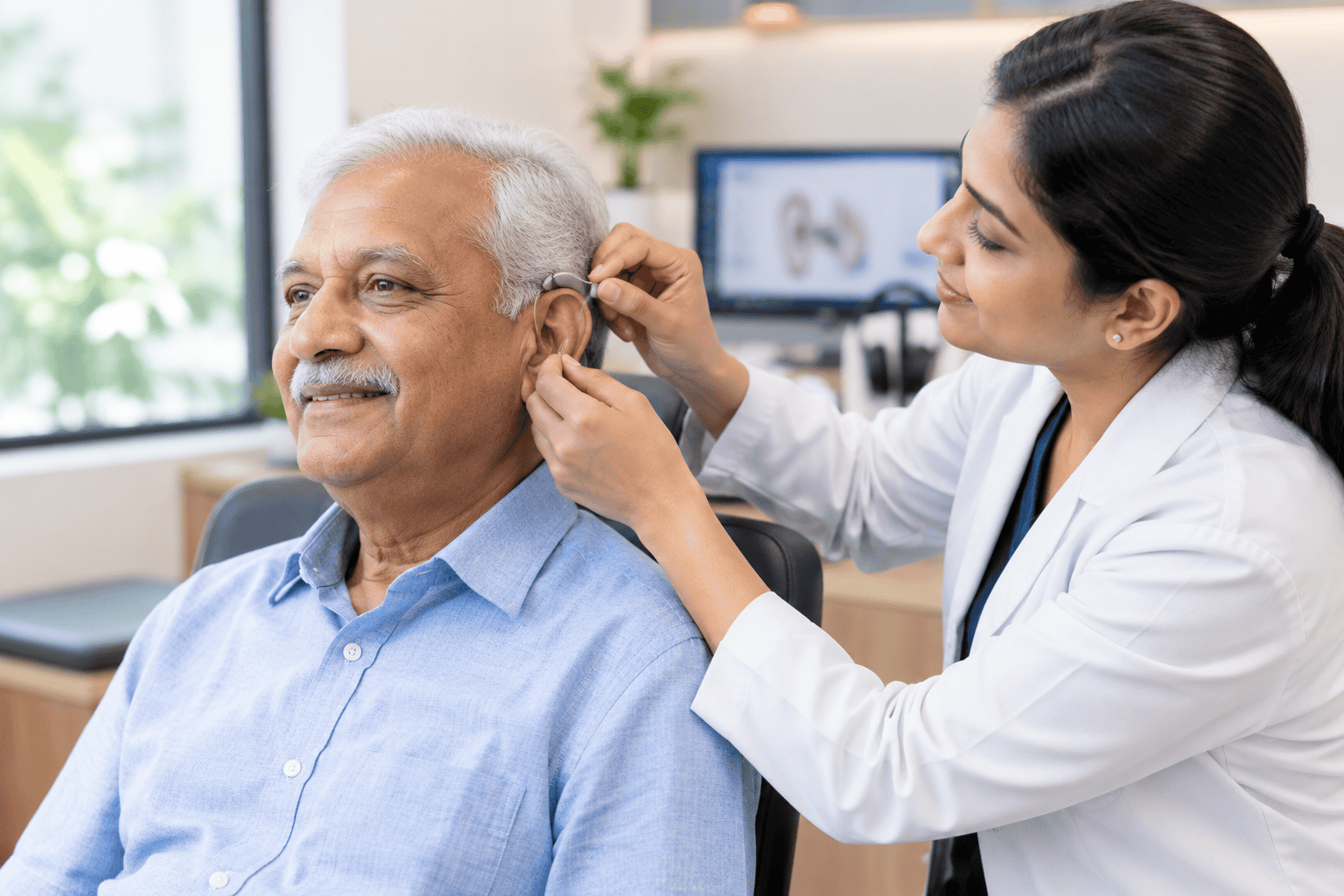
Buying a hearing aid is an important step towards managing hearing difficulties, but the process does not end when you receive the device. A hearing aid needs to be appropriately fitted, programmed and adjusted according to your hearing needs, comfort and everyday listening requirements.
This is where hearing aid fitting becomes an important part of hearing care.
A professional hearing aid fitting involves more than simply placing a hearing aid in your ear. An audiologist may check the physical fit, connect the device to fitting software, adjust amplification settings, verify how the hearing aid is performing and explain how to use and care for it. Follow-up appointments can then be used to make further adjustments based on your experience with the device.
If you have recently purchased hearing aids in Sirsa, Hisar, Rohtak, Hanumangarh or Bathinda, understanding the fitting process can help you know what to expect.
What Is Hearing Aid Fitting?
Hearing aid fitting is the process of setting up and adjusting a hearing aid so that it is suitable for the wearer’s hearing requirements, physical comfort and listening needs.
During a professional hearing aid fitting, the audiologist may perform several steps, including:
- Checking the hearing aid and its physical condition
- Confirming the device is appropriate for the ear
- Programming the hearing aid
- Adjusting amplification settings
- Checking sound quality and comfort
- Performing verification when appropriate
- Teaching the wearer how to insert and remove the device
- Explaining cleaning and maintenance
- Demonstrating controls and features
- Discussing realistic expectations
- Planning follow-up appointments
Professional fitting is important because the settings that work for one person may not be suitable for another. Hearing aids can be adjusted using specialised software according to the individual’s hearing information and listening requirements.
What Happens During a Hearing Aid Fitting?
The exact hearing aid fitting process can vary depending on the hearing aid, the person’s hearing needs and the audiologist’s approach. However, there are several common stages.
1. Your Audiologist Checks the Hearing Aid
Before beginning the hearing aid fitting, the device may be inspected to make sure it is functioning correctly.
Professional guidance recommends quality-control checks before fitting begins. The device may also be checked against the original order, particularly when custom hearing aids or earmoulds are involved.
The audiologist may check:
- The device model
- Physical condition
- Ear mould or dome
- Tubing, if applicable
- Microphones
- Receiver
- Battery or charging system
- General operation
This helps ensure the device is ready for programming and use.
2. The Hearing Aid Is Programmed
One of the main parts of hearing aid fitting is programming.
Modern hearing aids are generally connected to specialised computer software. The audiologist can use information from your hearing assessment to configure amplification and other settings.
The programming may take factors such as the following into account:
- Your hearing thresholds
- Speech understanding
- Listening environments
- Comfort with different sounds
- Type of hearing aid
- Your communication needs
- Whether you use one or two hearing aids
The goal is not simply to make everything louder. The device needs to provide appropriate amplification while considering comfort and speech audibility.
3. Physical Fit and Comfort Are Checked
A hearing aid should fit securely and comfortably.
During the hearing aid fitting, the audiologist may check whether the device or earmould is sitting correctly and whether there are issues such as discomfort or unwanted feedback.
You should tell your audiologist if:
- The hearing aid feels loose
- Your ear feels uncomfortable
- The device feels too tight
- You notice whistling or feedback
- The sound feels unusually loud
- The device is difficult to insert or remove
Do not simply tolerate discomfort because you have just purchased a hearing aid. Small physical or programming adjustments may make a significant difference to your experience.
4. Hearing Aid Verification May Be Performed
Another important part of professional hearing aid fitting is verification.
Verification is used to check whether the hearing aid is performing as intended. Depending on the clinical situation, different verification methods may be used.
One method is real-ear measurement, also known as probe-microphone measurement. This allows the professional to examine the sound level produced by the hearing aid in relation to the individual’s ear and hearing requirements.
The American Academy of Audiology recommends verification as part of professional hearing aid care and describes real-ear verification as a way of checking programming and amplification.
The American Academy of Audiology and ASHA also describe probe-microphone verification as one of the objective methods that may be used during hearing device services.
Verification is useful because the settings displayed in fitting software do not by themselves tell the entire story of how sound is being delivered to an individual listener.
5. You Learn How to Use Your Hearing Aid
A hearing aid fitting is also an educational appointment.
Your audiologist may demonstrate how to:
- Put the hearing aid on correctly
- Remove it safely
- Turn it on and off
- Change programmes, if applicable
- Adjust volume, if the device allows it
- Charge the hearing aid
- Replace batteries, where applicable
- Clean the device
- Store it safely
- Connect it to compatible devices
If you are new to hearing aids, do not worry if you cannot remember everything during your first appointment.
It is completely reasonable to ask the audiologist to demonstrate something again.
If a family member or caregiver helps you with your hearing aids, they can also learn the basic handling and care instructions where appropriate.
6. Your Audiologist Explains What to Expect
A new hearing aid can make everyday sounds seem different, particularly when you have not worn amplification before.
During hearing aid fitting, your audiologist can discuss what you may notice when using your device and answer questions about your experience.
For example, you may initially become more aware of:
- Background sounds
- Household noises
- Footsteps
- Fans
- Traffic
- Utensils
- People’s voices
- Environmental sounds
This does not necessarily mean that the hearing aid is incorrectly programmed. However, if a sound is uncomfortable, excessively loud or otherwise concerning, tell your audiologist so the settings can be reviewed.
Professional guidance emphasises counselling, orientation and training as part of hearing device fitting services.
Why Is Follow-Up After Hearing Aid Fitting Important?
Your first hearing aid fitting may not be the final adjustment.
Once you start using your hearing aid in everyday situations, you may discover things that were difficult to identify during the initial appointment.
For example, you may notice:
- Voices sound clear indoors but less clear outdoors
- Certain sounds seem too loud
- The hearing aid feels uncomfortable
- You have difficulty using a particular feature
- Bluetooth or phone connectivity needs help
- The device needs cleaning
- You need help changing settings
This is why hearing aid follow-up is an important part of ongoing hearing care.
Post-fitting appointments can involve checking physical fit, discussing your experience, validating benefit and making programming or training adjustments when required.
When Should You Return for a Hearing Aid Adjustment?
There is no single schedule that is suitable for every person.
Your audiologist may recommend a follow-up based on your individual needs and the type of hearing aid you are using.
You should contact your hearing care professional if you experience problems such as:
- Persistent discomfort
- Frequent feedback or whistling
- Difficulty hearing speech
- Sound that seems uncomfortably loud
- Problems with charging
- Difficulty connecting the hearing aid to a phone
- Difficulty operating the controls
- Concerns about the device
A hearing aid adjustment does not necessarily mean that something has gone wrong. Fine-tuning can be a normal part of adapting the device to your real-world listening experience. The American Academy of Audiology notes that additional fine-tuning may sometimes be needed after people use hearing aids in everyday life.
How Long Does Hearing Aid Fitting Take?
The duration of a hearing aid fitting depends on several factors.
A straightforward appointment may involve programming, physical fitting, verification, instructions and questions. More complex fittings may require additional time.
The appointment may take longer when:
- You are using hearing aids for the first time
- You need extensive training
- You are using two hearing aids
- Additional verification is performed
- Connectivity needs to be demonstrated
- Custom devices require specific attention
- Several programming changes are required
Rather than focusing only on appointment length, it is more useful to make sure you understand how to use and care for your hearing aids before leaving.
Hearing Aid Fitting for First-Time Users
If this is your first experience with hearing aids, you may have several questions.
You may wonder:
Will the hearing aid make everything loud?
Not necessarily. The device is programmed according to your hearing requirements, and settings can be adjusted if sounds are uncomfortable or difficult to understand.
Will I need adjustments?
Possibly. Some people require additional fine-tuning after experiencing their hearing aids in different everyday listening environments.
Should I wear my hearing aid all day immediately?
Your audiologist can provide guidance based on your individual circumstances and device.
What if I cannot operate the hearing aid?
Ask for another demonstration. Handling and device-management training are part of the fitting process.
Common Hearing Aid Fitting Problems and Solutions
Hearing Aid Feels Uncomfortable
Tell your audiologist where the discomfort occurs. The physical fit, dome, earmould or other components may need to be reviewed.
Hearing Aid Is Whistling
Feedback can sometimes occur because of fit, positioning, settings or other factors. Your audiologist can investigate the cause and make appropriate adjustments.
Sounds Are Too Loud
If sounds seem uncomfortably loud, contact your hearing care professional. Programming can be reviewed rather than simply stopping use without professional advice.
Speech Still Seems Difficult to Understand
Hearing aids support hearing, but they do not automatically make every listening situation effortless. If speech remains difficult to understand, particularly in background noise, discuss the situation with your audiologist.
Your settings may need adjustment, or additional communication strategies may be helpful.
You Are Confused About the Controls
Ask your audiologist to demonstrate the controls again. You can also practise inserting, removing and operating the device during the appointment.
Hearing Aid Care After Fitting
Good device care is part of maintaining your hearing aid.
Depending on your particular device, your hearing professional may recommend:
- Cleaning the hearing aid regularly
- Keeping microphones and openings free from debris
- Charging rechargeable devices correctly
- Replacing disposable batteries when required
- Storing the device appropriately
- Keeping it away from moisture according to manufacturer instructions
- Following the manufacturer’s cleaning recommendations
- Scheduling professional checks when needed
Avoid using household cleaning products or liquids on a hearing aid unless the manufacturer specifically recommends them.
What Should You Take to Your Follow-Up Appointment?
If you have a follow-up after your hearing aid fitting, bring the hearing aids and any accessories you normally use.
It can also help to make a short list of your questions.
For example:
- Which sounds are bothering me?
- Where do I struggle to understand speech?
- Is the device comfortable?
- Am I having feedback?
- Does the battery or charger work properly?
- Can I connect it to my phone?
- Do I understand how to clean it?
- Do I need another programming adjustment?
Keeping a simple hearing aid diary can also help you remember situations where you experienced difficulty. The American Academy of Audiology specifically suggests keeping track of questions and concerns when fine-tuning may be required.
Hearing Aid Fitting Services in Sirsa, Hisar, Rohtak, Hanumangarh and Bathinda
For people looking for hearing aid fitting in Sirsa, a professional fitting can help ensure that the hearing aid is properly programmed and that you understand how to use it.
Similarly, individuals searching for hearing aid fitting in Hisar, hearing aid fitting in Rohtak, hearing aid fitting in Hanumangarh or hearing aid fitting in Bathinda can benefit from discussing their hearing requirements with a qualified hearing care professional.
At Hear At Home, hearing care services are designed around the individual’s hearing needs. Depending on your situation, the process may include hearing assessment, hearing aid consultation, device selection, fitting, adjustments and guidance on hearing aid use.
If travelling to a clinic is difficult, ask about available home-based hearing care services where appropriate.
Hearing Aid Fitting Is More Than Buying a Device
Purchasing a hearing aid is only one part of the hearing care journey.
A proper hearing aid fitting connects the device to your individual hearing needs. It may include programming, physical fit checks, verification, orientation and practical training. Follow-up appointments then provide an opportunity to discuss your real-world experience and make adjustments when needed.
Every person’s experience is different. Some people may adapt quickly, while others may need more guidance and fine-tuning.
The most important step is to communicate openly with your audiologist about what you hear, what feels comfortable and where you continue to experience difficulty.
Final Thoughts
A hearing aid is a personal hearing device, and getting the most appropriate experience involves more than choosing a model and taking it home.
A professional hearing aid fitting can help ensure that the device is appropriately fitted, programmed and explained. Verification, practical training and follow-up can also help identify issues that may become noticeable only after you start using the hearing aid in everyday life.
Whether you are looking for hearing aid fitting in Sirsa, Hisar, Rohtak, Hanumangarh or Bathinda, speak with a qualified hearing care professional about your hearing assessment, device requirements and follow-up plan.
If you have recently purchased a hearing aid and are unsure about its settings, comfort or operation, schedule a professional hearing aid fitting or follow-up appointment rather than trying to make significant changes yourself.
Need Help With Hearing Care?
Hear At Home provides hearing care and hearing aid-related services for individuals and families. If you are considering a hearing aid or need assistance after purchasing one, contact Hear At Home to discuss your requirements.
Book Your Appointment Now
📞 +91 70272 00355
📧 info.hearathome@gmail.com