As people grow older, changes in hearing can gradually become a part of everyday life. An elderly person may start asking family members to repeat themselves, increase the television volume, or struggle to understand conversations in crowded places. Although these changes are common with ageing, they should not be ignored.
Hearing plays an important role in communication, family relationships and everyday activities. When an elderly person finds it difficult to hear clearly, even simple conversations with children, grandchildren and friends can become challenging. However, visiting a hearing care centre may not always be convenient, particularly for senior citizens who have difficulty travelling or need assistance from family members.
This is where home hearing services for elderly people can make a meaningful difference. Instead of travelling to a clinic, senior citizens can receive professional hearing care in the comfort of their homes. From hearing assessments and expert consultations to hearing aid fitting and follow-up support, home-based services make the process more convenient and accessible.
At Hear At Home, we understand the importance of comfortable and personalised hearing care. Our aim is to make professional hearing services more accessible by bringing experienced hearing care professionals and suitable hearing solutions directly to people’s doorsteps.
Let’s understand why home hearing services are helpful for elderly people and how families can make the right decisions for their loved ones.
1. Convenience for Elderly People Who Find Travelling Difficult
One of the biggest advantages of home hearing services for elderly people is convenience.
As people age, travelling to a clinic can sometimes become difficult. Some senior citizens may have mobility limitations, joint discomfort, difficulty walking long distances or may simply feel uncomfortable travelling frequently.
In such situations, arranging transportation and accompanying an elderly family member to a hearing clinic can become an additional responsibility for caregivers.
Home-based hearing care offers a practical alternative.
An audiologist can visit the person’s home for a hearing assessment or consultation, depending on the service arranged. This allows elderly individuals to access professional hearing support without making a separate journey to a clinic.
How home visits make hearing care easier
No need to travel long distances for an appointment.
Less dependence on family members for transportation.
Comfortable surroundings during the consultation.
Easier coordination for elderly people and caregivers.
More convenient follow-up appointments when required.
For families looking for home hearing services for elderly parents or grandparents, this approach can simplify the process of arranging hearing care.
2. Hearing Assessments in a Familiar Environment
Many elderly people feel more comfortable receiving services in familiar surroundings.
Visiting a new clinic may sometimes create uncertainty, especially for senior citizens who are unfamiliar with hearing tests or hearing aid technology. At home, they can sit comfortably, communicate with their family members and understand the process at their own pace.
A professional hearing assessment helps evaluate a person’s ability to hear different sounds and speech frequencies.
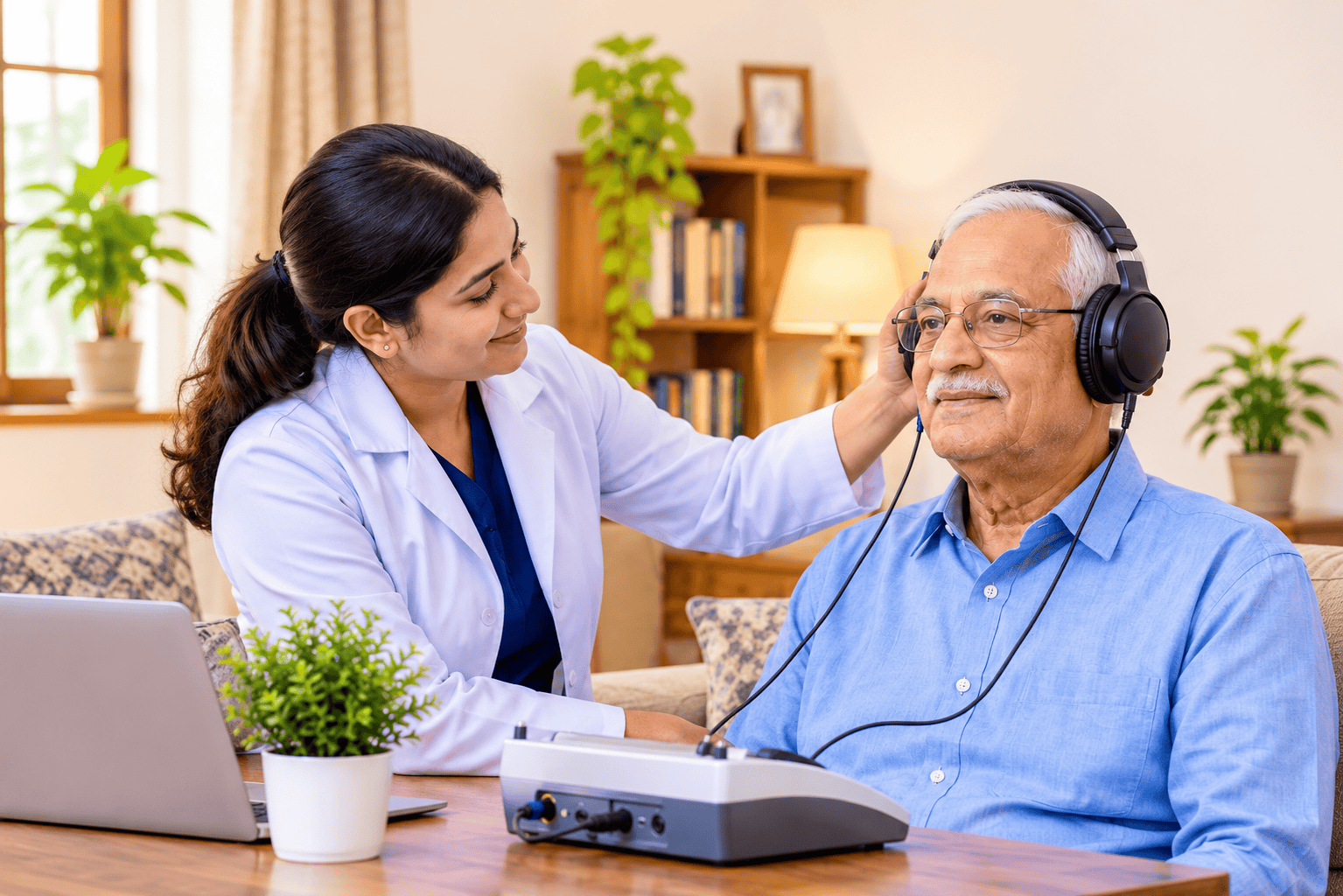
At Hear At Home, hearing assessment services include Pure Tone Audiometry (PTA), conducted by a certified audiologist. The assessment helps understand the individual’s hearing profile and provides useful information for discussing suitable hearing care options.
What happens during a home hearing test?
A typical home hearing assessment may involve:
Initial discussion: The audiologist asks about the person’s hearing difficulties, daily communication needs and relevant hearing history.
Hearing evaluation: Appropriate hearing assessment procedures are conducted using suitable equipment.
Understanding the results: The audiologist explains the findings in simple language.
Personalised guidance: Based on the assessment, suitable next steps and hearing care options are discussed.
The purpose of home hearing services for elderly individuals is to make professional assessment more accessible without compromising the importance of proper evaluation.
Home assessments must be conducted in an environment suitable for the testing procedure. The audiologist can guide the family about any necessary arrangements.
3. Helps Families Identify Hearing Difficulties Earlier
Sometimes, family members notice hearing difficulties before the elderly person acknowledges them.
For example, a father may regularly ask his children to repeat sentences. A grandmother may stop participating in group conversations because she cannot follow what everyone is saying. Another elderly person may prefer keeping the television volume higher than other family members find comfortable.
These everyday situations may indicate that a hearing assessment is worth considering.
Some common signs of hearing difficulties include:
Frequently asking people to repeat themselves.
Difficulty understanding conversations over the telephone.
Increasing television or mobile phone volume.
Struggling to follow conversations in crowded places.
Finding it difficult to understand people speaking softly.
Misunderstanding words during family discussions.
Avoiding social conversations because listening feels difficult.
Age-related hearing changes are one possible explanation, but other factors can also affect hearing. A proper assessment is important to understand what may be happening.
Home hearing services for elderly people make it easier for families to arrange an evaluation when they notice these signs.
Rather than assuming that hearing difficulties are simply a normal part of ageing, families can take a practical step towards understanding the problem.
4. Encourages Better Communication with Family Members
Communication is an important part of everyday family life.
Elderly people enjoy sharing experiences, discussing family matters, talking to grandchildren and participating in social gatherings. However, difficulty hearing conversations can make these interactions frustrating.
Imagine a grandfather sitting with his family but struggling to understand what his grandchildren are saying. He may smile and nod even when he has not understood the conversation.
Over time, repeated communication difficulties may discourage an elderly person from participating in discussions.
Appropriate hearing care can help address these difficulties. When a hearing assessment identifies a problem, the audiologist can discuss suitable options, including hearing aids where appropriate.
Home hearing services for elderly individuals also allow family members to participate in the consultation. They can explain the communication difficulties they have observed and understand how to support their loved one.
Small communication habits that can help
Family members can make conversations easier by:
Speaking clearly at a comfortable pace.
Facing the elderly person while talking.
Reducing background television or music noise.
Avoiding shouting, which may distort speech.
Repeating or rephrasing sentences when necessary.
Giving the person enough time to respond.
These simple habits can make everyday communication more comfortable while the person explores appropriate hearing care.
5. Personalised Hearing Aid Consultation and Fitting
Not every person with hearing difficulties requires the same hearing solution.
The appropriate hearing aid depends on several factors, including the hearing assessment results, lifestyle, communication needs, comfort and personal preferences.
For elderly individuals, understanding hearing aid options can sometimes feel confusing. Different models have different features, designs, controls and price ranges.
This is why professional guidance is important.
Home hearing services for elderly people can make hearing aid consultations more convenient by allowing the audiologist to understand the person’s daily routine and discuss suitable options in a familiar setting.
What should be considered when choosing a hearing aid?
Hearing requirements: The device should be selected according to the individual’s hearing assessment and professional recommendations.
Comfort: The hearing aid should feel comfortable during regular use.
Ease of handling: Senior citizens may prefer devices with controls and features that are easy to understand and operate.
Battery or charging preferences: Some devices use replaceable batteries, while others offer rechargeable options.
Lifestyle: A person’s daily activities, conversations and listening environments should be considered.
Budget: The family should understand the available options, costs and warranty conditions before making a purchase.
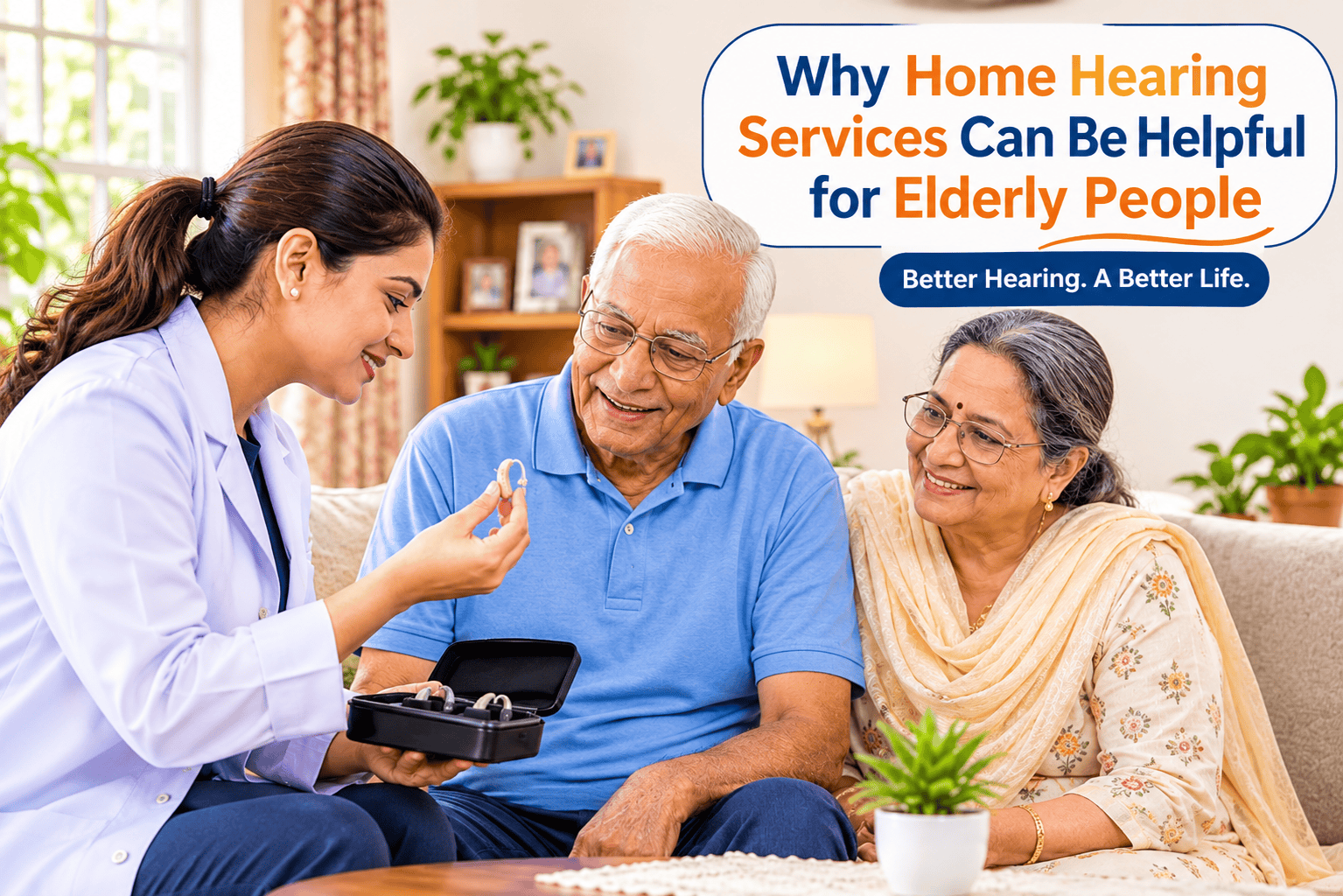
At Hear At Home, hearing aid fitting includes personalised programming and adjustments. A free trial period is also listed among the services offered, allowing customers to explore suitable options before making a purchase decision.
The goal is not simply to select a device but to find a hearing solution that fits the individual’s needs.
6. Reduces the Burden on Family Members and Caregivers
Family members often play an important role in managing the daily needs of elderly people.
They may already be responsible for medical appointments, household arrangements, medicines and other activities. Adding repeated travel for hearing consultations can make their schedule more demanding.
Home hearing services for elderly parents can reduce some of these practical challenges.
Instead of arranging transport for every consultation, family members can coordinate a suitable home visit. They can also be present during the assessment and understand the audiologist’s recommendations directly.
This is particularly helpful when an elderly person needs assistance understanding hearing aid features or remembering instructions.
How caregivers can support the process
Family members can:
Observe and note common hearing difficulties.
Help arrange a professional hearing assessment.
Share relevant information with the audiologist.
Understand how to operate and maintain the hearing aid.
Encourage regular use according to professional guidance.
Arrange follow-up appointments when needed.
Involving caregivers also helps ensure that the elderly person receives support beyond the initial consultation.
7. Easier Follow-Up, Hearing Aid Adjustments and Maintenance
Hearing care does not necessarily end after the first assessment or hearing aid fitting.
A person using hearing aids may need time to become familiar with the device. They may also require adjustments to improve comfort and listening experiences.
For elderly users, follow-up support can be especially valuable because they may have questions about operating, cleaning, charging or maintaining their hearing aids.
Home hearing services for elderly people can make ongoing support more accessible, particularly when travelling to a clinic is inconvenient.
Common hearing aid support requirements
Cleaning and maintenance: Regular cleaning helps keep hearing aids in suitable working condition. Users should follow the manufacturer’s cleaning instructions.
Battery and charging guidance: Elderly users may need assistance understanding battery replacement or charging procedures.
Programming adjustments: The audiologist may recommend adjustments based on feedback and the person’s hearing requirements.
Comfort checks: If the hearing aid feels uncomfortable, the user should discuss the issue with the hearing care professional.
Repair and servicing: Professional assistance may be required if the device stops working properly.
Hear At Home provides hearing aid repair and maintenance services, including servicing, cleaning, batteries and spare parts. This gives users access to support beyond the initial fitting.
8. Makes Hearing Care More Comfortable and Less Intimidating
Some elderly individuals hesitate to seek hearing care because they are unsure about the testing process or worried that they may need to purchase a hearing aid.
Others may not recognise the extent of their hearing difficulties.
A home consultation can create a more relaxed experience by allowing the person to receive guidance in familiar surroundings.
They can ask questions freely, involve family members and understand the available options without feeling rushed.
Professional hearing care should always focus on understanding the person’s needs rather than pressuring them into buying a particular product.
At Hear At Home, the focus is on personalised assessments, expert recommendations and suitable hearing solutions.
Home hearing services for elderly people are particularly useful for those who value privacy, comfort and personal attention during their hearing care journey.
9. Home Hearing Services Are Helpful for Senior Citizens in Smaller Cities Too
Access to convenient hearing care is important not only in large cities but also in smaller towns and surrounding communities.
Senior citizens living in towns such as Sirsa, Hisar, Rohtak, Hanumangarh and Bathinda may prefer a home consultation instead of travelling to another location for hearing support.
Home visits can help bridge this practical gap by bringing hearing assessment and consultation services closer to elderly individuals.
Hearing care in Sirsa
Families in Sirsa can explore home hearing services for elderly parents who find clinic visits inconvenient. A professional hearing assessment can help identify hearing difficulties and guide the next steps.
Hearing care in Hisar
For senior citizens in Hisar, home-based hearing consultations offer a convenient way to discuss hearing concerns and explore suitable hearing aid options.
Hearing care in Rohtak
Families in Rohtak can consider home hearing services for elderly family members who need assistance arranging appointments or travelling to a hearing care centre.
Hearing care in Hanumangarh
Elderly individuals in Hanumangarh can benefit from convenient access to hearing consultations, assessments and guidance about hearing care solutions.
Hearing care in Bathinda
Families in Bathinda looking for comfortable hearing care for senior citizens can explore home visit options and discuss their requirements with the Hear At Home team.
Hear At Home lists home hearing consultation availability across these locations. Families can contact the team to confirm appointment availability and the services offered in their area.
10. Helps Elderly People Make Informed Hearing Care Decisions
Choosing a hearing solution is an important decision. It should be based on professional guidance rather than advertisements, assumptions or recommendations from people with different hearing requirements.
A home consultation provides an opportunity for elderly individuals and their families to discuss their concerns directly with an audiologist.
They can understand the assessment results, ask about different hearing aid styles and discuss the practical aspects of using a hearing device.
Before selecting a hearing aid, consider asking:
What do my hearing assessment results indicate?
Which type of hearing aid is suitable for my requirements?
Is the device comfortable for everyday use?
How do I clean and maintain it?
What is included in the warranty?
What support is available after fitting?
Can I try the device before purchasing it?
These questions can help families understand their choices and make a more informed decision.
The purpose of home hearing services for elderly individuals is to make this process easier, more comfortable and more accessible.
When Should Elderly People Consider a Home Hearing Assessment?
Families should consider arranging a hearing assessment when an elderly person regularly experiences difficulty understanding conversations or responding to everyday sounds.
A professional assessment may also be useful when:
The television volume is consistently too high.
Telephone conversations have become difficult.
The person struggles to hear visitors or family members.
They frequently misunderstand spoken instructions.
They complain that people speak unclearly.
They have an existing hearing aid that no longer feels suitable.
It is important not to assume that every hearing difficulty is caused by ageing. Earwax build-up, infections and other ear-related conditions may also affect hearing.
If hearing loss occurs suddenly, or is accompanied by severe ear pain, discharge, dizziness or other concerning symptoms, prompt medical evaluation is important. Home hearing consultations should not replace an ENT consultation when medical examination is required.
Why Choose Hear At Home for Elderly Hearing Care?
Finding a hearing care provider who understands the requirements of senior citizens can make the experience easier for the entire family.
Hear At Home focuses on making professional hearing care accessible through home visits and personalised services.
Some of the key features of its hearing care services include:
1. Certified RCI Audiologists
Hearing assessments and professional guidance are provided by certified audiologists.
2. Home Visit Services
Individuals who find travelling difficult can arrange hearing assessments or hearing aid fitting at home.
3. Personalised Hearing Assessment
Hearing evaluation services include Pure Tone Audiometry to help understand individual hearing requirements.
4. Hearing Aid Consultation and Fitting
The team offers guidance, programming and fitting based on the person’s hearing needs.
5. Multi-Brand Hearing Aid Options
Customers can explore different hearing aid options with professional guidance.
6. Free Trial Period
A free trial period is listed among the available hearing aid services, helping customers explore suitable devices before purchasing.
7. Repair and Maintenance Support
Ongoing support includes servicing, cleaning, batteries and spare parts.
8. Convenient Appointment Arrangements
Families can contact the team to discuss their requirements and arrange a suitable appointment.
Whether you are looking for home hearing services for elderly parents in Sirsa, Hisar, Rohtak, Hanumangarh or Bathinda, Hear At Home aims to make hearing care more convenient and accessible.
Conclusion
Hearing difficulties can affect everyday communication, family interactions and the ability to participate comfortably in social activities. For senior citizens who find travelling inconvenient, receiving professional hearing care at home can be a practical and comfortable alternative.
From hearing assessments and personalised consultations to hearing aid fitting and ongoing maintenance, home-based services help make the hearing care journey easier for elderly individuals and their families.
The most important step is to recognise the signs of hearing difficulty and seek appropriate professional guidance instead of ignoring the problem.
If your parents or grandparents are experiencing difficulty hearing conversations, consider arranging a professional hearing assessment.
Hear At Home is here to make hearing care more accessible, comfortable and convenient.
Whether you are in Sirsa, Hisar, Rohtak, Hanumangarh or Bathinda, connect with Hear At Home to explore suitable home hearing services for elderly family members.
Better Hearing. A Better Life.
Call Hear At Home: +91 70272-00355
Website: https://hearathome.in