
As people grow older, their bodies go through several natural changes, and hearing is one of the abilities that may gradually change with age. Many senior citizens begin to experience difficulty understanding conversations, hearing television clearly, or following discussions in noisy environments. However, these changes are not always recognised immediately.
A hearing test for senior citizens is an important step towards identifying hearing difficulties and understanding what kind of hearing care may be helpful. Regular hearing assessments can help older adults and their families recognise possible hearing problems early and make informed decisions about their hearing health.
Hearing difficulties can affect everyday communication, family relationships and participation in social activities. When an older person struggles to hear, family members may assume that they are ignoring conversations or not paying attention. In reality, they may simply be unable to hear certain words clearly.
At Hear At Home, we understand the importance of accessible hearing care for senior citizens. Whether you are looking for a hearing assessment for an elderly parent or want to understand your own hearing health, professional guidance can help you take the next step.
In this blog, we will explain why hearing tests matter for older adults, which signs to watch for, what happens during an assessment, and how families can support senior hearing care in Sirsa, Hisar, Rohtak, Hanumangarh and Bathinda.
What Is a Hearing Test for Senior Citizens?
A hearing test for senior citizens is an assessment designed to evaluate how well an older adult can hear different sounds, tones and speech. It helps a hearing care professional understand whether hearing difficulties are present and how they may affect everyday communication.
Age-related hearing loss, also known as presbycusis, is a common reason older adults experience changes in hearing. It usually develops gradually, which means a person may not notice the change until conversations become increasingly difficult.
A senior hearing test may include questions about hearing concerns, an examination of the ears and specific tests to assess hearing ability. Depending on the person’s needs, a hearing care professional may recommend further evaluation or suitable hearing support.
The purpose of a hearing test for senior citizens is not simply to check whether someone can hear a sound. It is also to understand their communication difficulties and help them explore appropriate options.
7 Important Reasons Senior Citizens Should Get Their Hearing Tested
1. Identify Hearing Difficulties Early
One of the main reasons to arrange a hearing test for senior citizens is to identify possible hearing difficulties before they significantly interfere with everyday life.
Age-related hearing changes often develop slowly. An older adult might continue attending family gatherings and speaking with relatives without realising that they are missing parts of conversations.
A hearing assessment can help identify these difficulties and provide a clearer understanding of the person’s hearing ability.
Early identification also gives families an opportunity to discuss suitable next steps with a qualified professional rather than waiting until communication becomes more challenging.
2. Improve Everyday Communication with Family
Communication plays an important role in maintaining relationships, particularly during later life. Senior citizens often enjoy conversations with children, grandchildren, friends and neighbours.
However, when hearing becomes difficult, they may struggle to understand people speaking softly or quickly. They might repeatedly ask others to repeat themselves or misunderstand certain words.
A hearing test for senior citizens can help identify the nature of these difficulties and guide the next steps in hearing care.
With appropriate support, older adults may find it easier to participate in family conversations and feel more comfortable during everyday interactions.
Family members can also help by speaking clearly, reducing background noise and facing the person while talking.
3. Understand Speech More Clearly in Noisy Places
Hearing a person in a quiet room can be different from following a conversation in a busy environment.
Restaurants, family functions, markets and gatherings often contain several competing sounds. An older adult may hear that someone is speaking but struggle to understand the actual words.
This can be frustrating, particularly when conversations involve multiple people.
A hearing assessment for elderly individuals can help determine whether hearing difficulties are contributing to these challenges. A professional may also explain practical communication strategies and discuss whether additional hearing support could be beneficial.
If your parent frequently struggles to follow conversations in crowded places, arranging a hearing test for senior citizens is a sensible step towards understanding the problem.
4. Support Social Participation and Confidence
Hearing difficulties can sometimes make social situations tiring. A person who repeatedly misses parts of conversations may feel uncomfortable asking others to repeat themselves.
Over time, some older adults may begin avoiding gatherings, group discussions or telephone conversations because they find communication difficult.
This does not happen to everyone, but it is an important concern for families to recognise.
Regular elderly hearing care can help identify communication barriers and explore ways to address them.
A hearing test for senior citizens can provide useful information about hearing ability and possible support options. With appropriate care, older adults may feel better prepared to participate in conversations and social activities.
Families should encourage senior members to discuss hearing concerns openly without embarrassment or pressure.
5. Understand Hearing Changes That May Affect Daily Activities
Hearing plays a role in many ordinary activities, from speaking with neighbours to listening to announcements and following instructions.
When someone experiences hearing difficulties, they may find it harder to notice certain sounds or understand spoken information in everyday situations.
A professional hearing assessment helps determine which sounds and frequencies a person has difficulty hearing. The findings can guide practical recommendations based on their individual needs.
For example, a hearing care professional may discuss communication strategies, suitable hearing devices or a referral for medical evaluation if necessary.
A hearing test for senior citizens should be considered part of overall hearing care, particularly when a person or their family notices a change in hearing ability.
It is important to remember that hearing tests do not diagnose every possible cause of hearing difficulty. Some problems may require examination by an ENT specialist or another medical professional.
6. Explore Suitable Hearing Aids and Other Support Options
If a hearing assessment identifies hearing loss, the next step depends on its type, severity and possible cause.
In some cases, medical treatment may be appropriate. In others, hearing aids or other communication support options may be recommended.
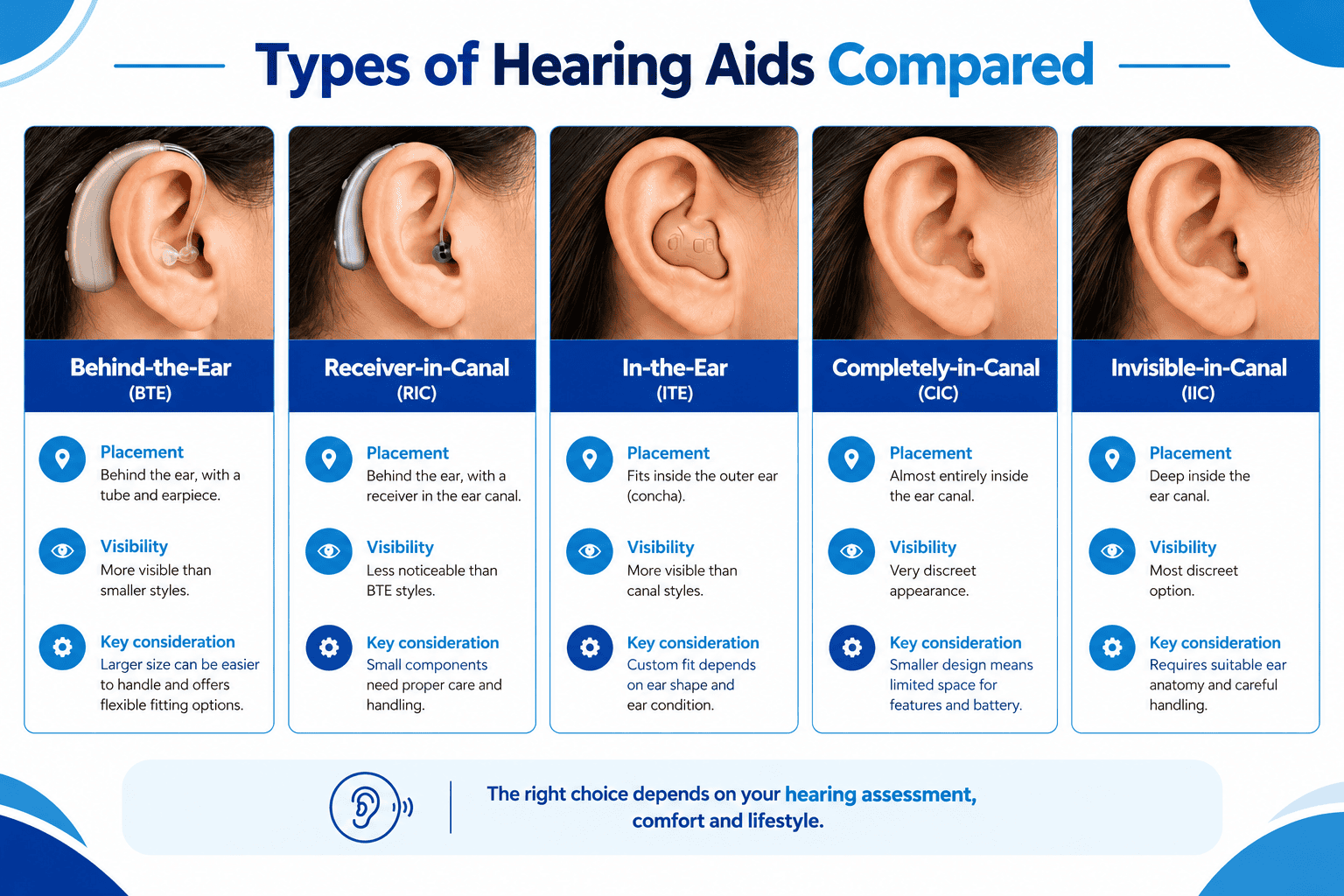
Hearing aids for senior citizens are available in different styles and configurations. The right choice depends on the person’s hearing assessment, lifestyle, comfort, dexterity and listening needs.
A hearing care professional can explain available options and help the individual understand what to expect from a hearing device.
A hearing test for senior citizens is an important starting point because hearing aids should be selected according to assessed hearing needs rather than age alone.
When comparing the best hearing aids for elderly individuals, families should consider:
Hearing assessment results: The device should suit the person’s identified hearing needs.
Comfort and fit: The hearing aid should be comfortable for regular use.
Ease of handling: Controls, charging and cleaning should be manageable.
Professional fitting: Appropriate adjustment and follow-up support are important.
Aftercare: The person should know where to seek help if adjustments or maintenance are needed.
Hearing aids do not restore normal hearing in every situation, and results vary between individuals. A professional can explain the likely benefits and limitations before a decision is made.
7. Give Families a Clearer Hearing Care Plan
Family members often notice hearing changes before the older person recognises them.
For example, a parent may frequently increase the television volume, misunderstand questions or appear confused when several people speak together.
These signs can cause concern, particularly when family members are unsure what to do next.
A hearing test for senior citizens can provide useful information that helps the individual and their family make informed decisions.
After the assessment, the professional may explain the findings, discuss possible hearing support and recommend further medical evaluation when appropriate.
Having a clear plan can make it easier for families to support an older relative without making assumptions about their hearing.
The goal of elderly hearing care is to understand the person’s needs and help them access suitable support.
Common Signs That an Older Adult May Need a Hearing Test
Recognising the early signs of hearing difficulty can help families decide when to seek professional advice.
Consider arranging a hearing test for senior citizens if you notice any of the following:
Frequently asking people to repeat their words.
Increasing the television or mobile phone volume more than usual.
Struggling to follow conversations in restaurants or family gatherings.
Having difficulty hearing people speaking from another room.
Misunderstanding words during ordinary conversations.
Finding telephone conversations increasingly difficult.
Avoiding social situations because communication feels tiring.
Reporting ringing or buzzing sounds in the ears.
Feeling that people are speaking unclearly even when they are speaking normally.
These signs do not necessarily confirm hearing loss. Earwax build-up, ear infections and other conditions can also affect hearing.
If hearing changes occur suddenly, seek urgent medical attention rather than waiting for a routine appointment. Ear pain, discharge or other new ear symptoms should also be assessed by an appropriate healthcare professional.
What Happens During a Senior Hearing Test?
Many people feel uncertain about hearing assessments because they do not know what to expect. Understanding the process can make the experience more comfortable.
Step 1: Discuss Hearing Concerns
The hearing care professional may ask about the person’s symptoms, medical history, daily communication difficulties and any previous hearing assessments.
This helps establish which concerns need attention.
Step 2: Examine the Ears
An examination may be performed to look for visible problems, such as earwax build-up or signs that require medical attention.
If a condition needs treatment or further investigation, the person may be referred to an appropriate medical professional.
Step 3: Assess Hearing Ability
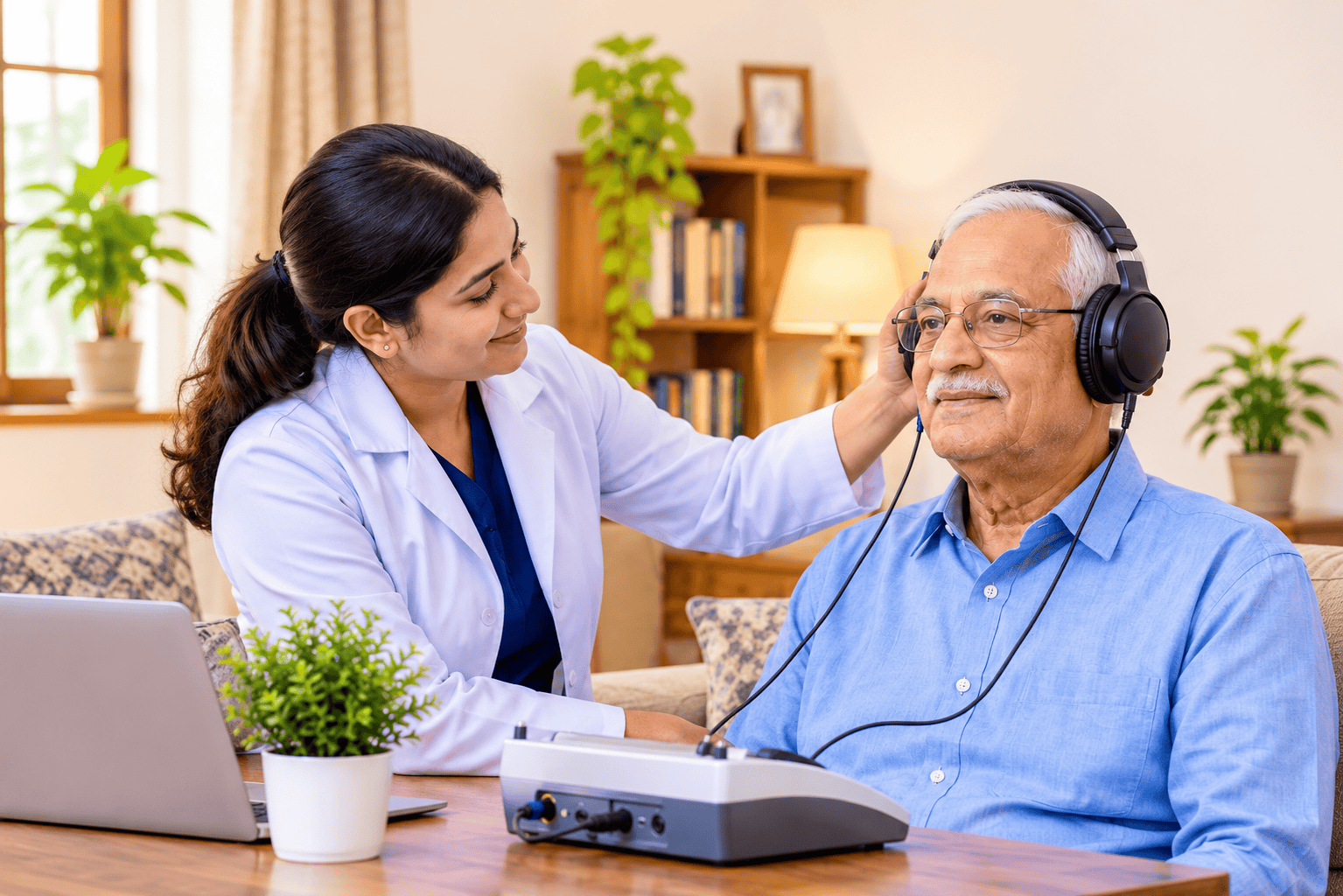
Depending on the assessment, the person may listen to different tones or speech through headphones and indicate when sounds are heard.
Additional tests may be used when required. The exact procedure depends on the person’s needs and the professional’s assessment.
Step 4: Explain the Findings
The professional explains the results in understandable language, including which sounds or frequencies may be difficult to hear.
The results help determine whether further evaluation or hearing support may be appropriate.
Step 5: Discuss the Next Steps
Depending on the findings, recommendations may include monitoring, medical evaluation, communication strategies, hearing aids or follow-up appointments.
A hearing test for senior citizens should help the individual understand their hearing health and the options available to them.
How Often Should Senior Citizens Get Their Hearing Tested?
There is no single testing schedule that suits every older adult. The appropriate frequency depends on their symptoms, previous test results, medical history and professional advice.
Senior citizens who notice changes in hearing should not delay an assessment simply because they had a test several years ago.
Those who already use hearing aids may also require follow-up appointments to check comfort, performance and whether adjustments are needed.
Families can discuss an appropriate testing schedule with a qualified hearing care professional, particularly if hearing difficulties are becoming more noticeable.
A hearing test for senior citizens is especially worth considering when there are new communication problems or concerns about changes in hearing ability.
How Families Can Support Senior Citizens with Hearing Difficulties
Family support can make hearing care less stressful and more practical for older adults.
Here are a few simple ways to help:
Encourage open conversations: Discuss hearing concerns respectfully and avoid making the person feel embarrassed.
Choose a suitable appointment time: Arrange the assessment when the older adult feels comfortable and is less likely to be rushed.
Reduce background noise: Switch off unnecessary television or music when speaking.
Speak clearly: Use a natural pace and face the person while talking instead of shouting.
Attend the appointment together: With the person’s permission, a family member can help communicate concerns and remember the recommendations.
Follow professional advice: If further assessment, hearing aid fitting or medical evaluation is recommended, help the person understand the next steps.
Arranging a hearing test for senior citizens can be a positive family decision that prioritises communication, comfort and informed care.
Senior Hearing Care in Sirsa, Hisar, Rohtak, Hanumangarh and Bathinda
Access to hearing care is important for older adults and their families. People should be able to explore assessment and support options without unnecessary confusion about where to begin.
Hear At Home serves people seeking hearing care in Sirsa, Hisar, Rohtak, Hanumangarh and Bathinda.
If you live in one of these locations and have noticed hearing difficulties in yourself or an elderly family member, you can enquire about available hearing assessment services and suitable appointment options.
Whether you are searching online for a hearing test for senior citizens in Sirsa, a hearing assessment for elderly family members in Hisar, or senior hearing care in Rohtak, Hanumangarh or Bathinda, the first step is to discuss your concerns with a qualified professional.
Depending on the service available in your location, you can enquire about appointment arrangements and whether a home visit is suitable for your needs.
For older adults who find travelling difficult, asking about available home hearing care services may help make the process more convenient.
Visit https://hearathome.in/ to learn more about Hear At Home and enquire about hearing care services.
Conclusion:
Hearing is an important part of everyday communication, family relationships and social participation. Although hearing can change with age, persistent difficulty understanding conversations should not automatically be dismissed as a normal part of getting older.
A hearing test for senior citizens helps identify possible hearing difficulties, understand their impact and guide appropriate care. It also gives families a practical way to support older relatives who may be struggling to hear clearly.
If you have noticed changes in your parent’s hearing or are experiencing hearing difficulties yourself, consider arranging a professional assessment rather than ignoring the signs.
Hear At Home provides hearing care services for people in Sirsa, Hisar, Rohtak, Hanumangarh and Bathinda. Visit https://hearathome.in/ to enquire about assessment options and take an informed step towards better hearing care.
Take the first step today: discuss your hearing concerns with a qualified professional and explore the right support for your needs.