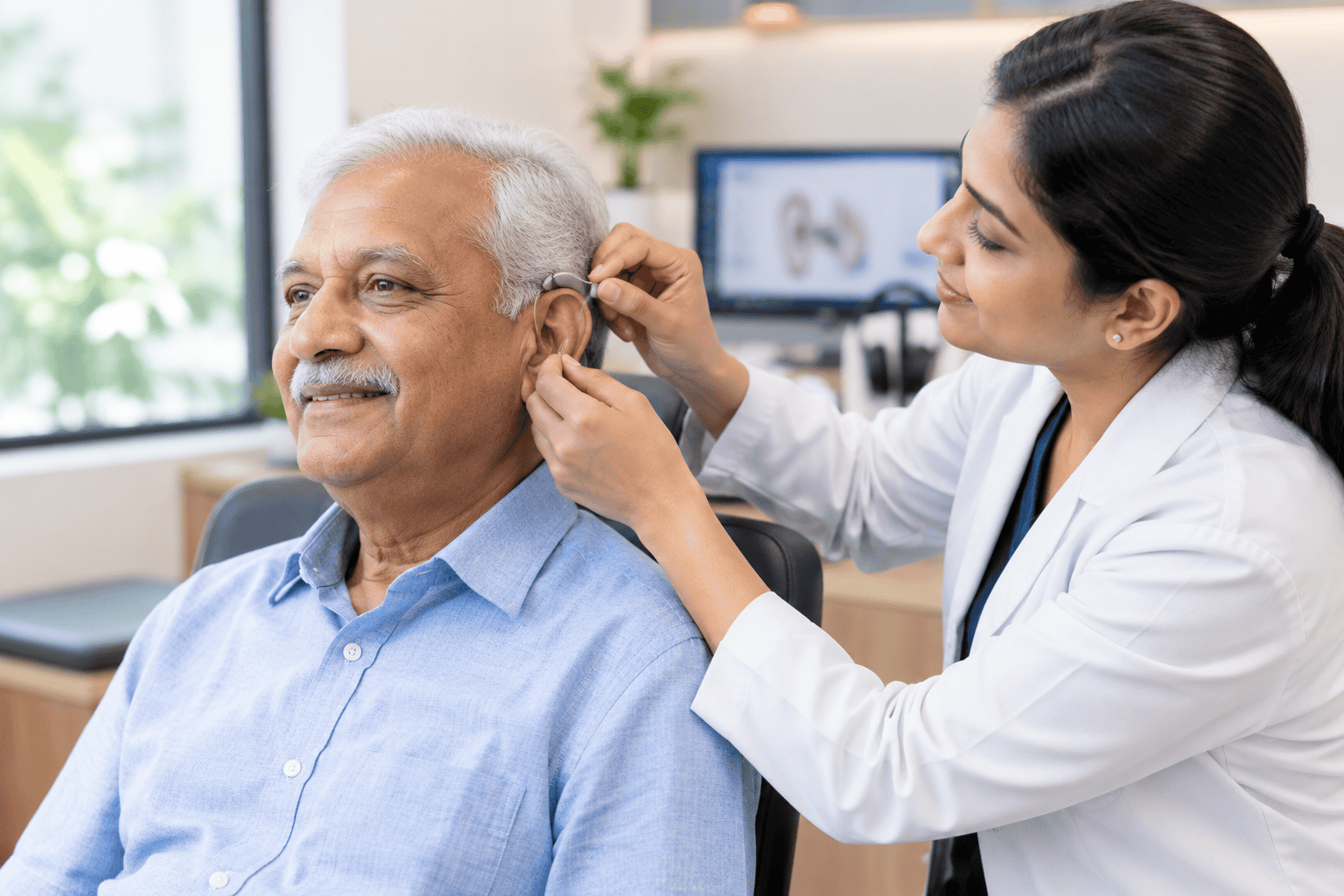

Hearing plays an important role in everyday communication. We use it while talking to family members, speaking on the phone, watching television, attending meetings, travelling, and interacting with people in busy places. However, hearing changes can happen gradually, and many people do not immediately realise that they are having difficulty hearing.
So, when should you get a hearing test? A good starting point is whenever you notice a consistent change in how you hear or understand speech. Asking people to repeat themselves frequently, increasing the television volume, struggling in noisy places, or noticing ringing in your ears can all be reasons to consider a hearing check.
Hearing difficulties are not limited to older adults. People of different ages may experience changes in hearing for different reasons, including age, noise exposure, ear conditions, previous infections, or other factors. A professional hearing assessment can help understand whether there is a hearing concern and whether further evaluation may be appropriate.
In this guide, Hear At Home explains when should you get a hearing test, the 10 signs you should not ignore, what happens during a hearing assessment, and how hearing care can be accessed in Sirsa, Hisar, Rohtak, Hanumangarh and Bathinda.
When Should You Get a Hearing Test?
There is no single age or situation that applies to everyone. The right time for a hearing test depends on your symptoms, hearing history, noise exposure, age, and other individual factors.
If you regularly notice that conversations are becoming difficult to follow, sounds seem muffled, or you need higher volume than before, it may be time to arrange a hearing check.
For some people, the answer to when should you get a hearing test is simple: when hearing difficulties begin affecting normal communication.
A hearing screening or hearing assessment can provide useful information about how well you hear different sounds and frequencies. Depending on the situation, an audiologist may recommend further assessment or medical evaluation.
10 Signs You Shouldn’t Ignore
1. You Frequently Ask People to Repeat Themselves
One of the common signs that you may need a hearing test is frequently asking people to repeat what they have said.
Occasionally missing a word is normal. However, if phrases such as “What did you say?” or “Please repeat that” have become part of everyday conversations, it may be worth arranging a hearing check.
This can be particularly noticeable during conversations with family members, colleagues or friends.
If this happens regularly, you may be wondering when should you get a hearing test. Repeated communication difficulties are a reasonable reason to consider a professional hearing assessment.
2. You Keep Increasing the TV or Phone Volume
Do you often feel that the television is not loud enough, even though other family members find the volume uncomfortable?
Increasing the volume of the TV, mobile phone or other audio devices may be another sign worth paying attention to.
It does not automatically mean that you have hearing loss. However, if the change is consistent and other people are noticing it too, a hearing check can help you understand what is happening.
For anyone asking when should you get a hearing test, consistently needing higher volume is one situation where a hearing assessment may be useful.
3. You Struggle to Understand Conversations in Noisy Places
Restaurants, family gatherings, markets and social events can be challenging listening environments.
You may hear that someone is speaking but still struggle to understand the actual words, particularly when several people are talking at the same time.
Difficulty understanding speech in background noise is a recognised hearing concern. If you regularly avoid conversations because they are difficult to follow, consider discussing your symptoms with an audiologist.
A hearing test for adults can help assess hearing sensitivity and provide information about your hearing abilities.
4. People Sound Like They Are Mumbling
Another possible sign is when people seem to speak unclearly or mumble, even though others appear to understand them normally.
You may find yourself concentrating harder to understand ordinary conversations. Some sounds, particularly certain speech sounds, may become harder to distinguish.
If voices frequently sound unclear or muffled, you may be asking yourself when should you get a hearing test. Instead of simply assuming that people are speaking too softly, a hearing assessment can help determine whether your hearing may be contributing to the problem.
5. You Have Difficulty Hearing on the Phone
Phone conversations remove important visual cues such as facial expressions and lip movements. Because of this, hearing difficulties may become more noticeable during calls.
You may find yourself moving the phone closer to your ear, asking callers to repeat themselves, or preferring text messages because phone conversations have become difficult.
If this happens regularly, consider a hearing check.
A professional hearing assessment can evaluate hearing in each ear and may include speech-related testing depending on the assessment approach.
6. You Notice Ringing or Other Sounds in Your Ears
Ringing, buzzing, humming or similar sounds without an external source are commonly described as tinnitus.
Tinnitus can occur with or without hearing loss, and its causes can vary. If you regularly experience tinnitus, especially if it is persistent, worsening or affecting your daily life, it is sensible to discuss it with a healthcare professional.
This is another situation where people may ask when should you get a hearing test. A hearing assessment may be part of understanding your overall hearing status.
Do not assume that ringing in the ears always means hearing loss. A proper evaluation is more useful than trying to diagnose the cause yourself.
7. You Find Listening Extremely Tiring
Listening requires concentration, particularly when speech is difficult to understand.
If you frequently feel tired after conversations because you have to concentrate intensely on what people are saying, it may be worth paying attention to this change.
For example, you may understand one-to-one conversations reasonably well in a quiet room but feel exhausted after a group discussion or family gathering.
Listening fatigue can have different causes, but persistent difficulty following conversations is one reason to consider a hearing check.
If you are unsure when should you get a hearing test, changes that interfere with everyday communication are worth discussing with a hearing-care professional.
8. You Avoid Social Conversations
Some people gradually reduce participation in social situations because communicating has become difficult.
You may stop joining group conversations, avoid restaurants or gatherings, or prefer sitting quietly because following conversations requires too much effort.
This can happen gradually, meaning the person may not immediately connect it with a hearing difficulty.
If you notice yourself avoiding conversations because you cannot comfortably follow them, consider arranging a hearing assessment. Identifying communication difficulties is an important part of hearing care.
9. You Have Difficulty Hearing Alarms, Doorbells or Other Everyday Sounds
Everyday sounds can provide useful clues about changes in hearing.
You may start missing the doorbell, telephone ringing, alarms or other sounds that you previously noticed easily.
Missing an occasional sound does not necessarily indicate a hearing problem. However, if it happens repeatedly or people around you notice that you do not respond to sounds, a hearing check may be appropriate.
For older adults, family members sometimes notice these changes before the person recognises them.
This is one reason hearing test for senior citizens services can be useful when there are noticeable changes in everyday listening.
10. Family Members Tell You That Your Hearing Has Changed
Sometimes another person notices a hearing change before you do.
Family members may point out that you frequently ask for repetition, turn up the TV volume, do not respond when someone calls you, or misunderstand conversations.
If more than one person has mentioned a possible hearing difficulty, it is worth taking the concern seriously.
You may be wondering when should you get a hearing test because you personally feel that your hearing is fine. However, a professional hearing assessment can provide an objective picture of your hearing rather than relying only on your perception.
When Should Senior Citizens Get a Hearing Test?
Age-related changes in hearing can develop gradually. Because the change may happen slowly, a person may adapt to it without immediately realising that their hearing has changed.
For senior citizens, signs such as frequently asking people to repeat themselves, increasing TV volume, struggling in group conversations, difficulty hearing on the telephone, or noticing ringing in the ears may be reasons to arrange a hearing check.
So, when should you get a hearing test if you are a senior citizen?
If there is a noticeable change in communication or everyday hearing, consider discussing it with an audiologist. Regular hearing checks can also provide a useful baseline for monitoring hearing over time.
When Should Adults Get a Hearing Test?
Adults do not need to wait until hearing difficulties become severe before seeking information about their hearing.
A hearing test for adults may be worth considering when there are communication difficulties, a history of significant noise exposure, tinnitus, concerns about hearing in one or both ears, or a noticeable change in hearing.
If you work in a noisy environment or regularly use loud equipment or headphones, paying attention to changes in hearing is particularly important.
The answer to when should you get a hearing test is therefore not based only on age. Symptoms, risk factors and changes in everyday communication also matter.
What Happens During a Hearing Test?
Many people delay a hearing test because they do not know what to expect.
The exact hearing test procedure can vary depending on the person’s age, symptoms and hearing concerns. A professional assessment may begin with questions about your hearing history, communication difficulties, previous ear problems and other relevant information.
Depending on the assessment, an audiologist may look at the ears and perform hearing measurements.
Pure-Tone Hearing Test
A pure-tone hearing test, commonly associated with audiometry, checks how well you respond to sounds at different frequencies and loudness levels.
The responses can be recorded on an audiogram, which provides information about hearing sensitivity in each ear.
Speech Testing
Speech testing may also be included in a comprehensive hearing assessment. It can help evaluate how well speech is detected or understood under the specific testing conditions.
The exact tests required depend on the individual’s symptoms and the professional assessment.
Is a Hearing Screening the Same as a Full Hearing Assessment?
Not always.
A hearing screening is generally intended to identify people who may need further assessment. A comprehensive hearing assessment can provide more detailed information about hearing sensitivity, speech understanding and other aspects of auditory function.
If a screening indicates a possible concern, further evaluation may be recommended.
This is why searching online for when should you get a hearing test should not replace an individual assessment when you are experiencing persistent hearing difficulties.
Can You Get a Hearing Test at Home?
For people who find it difficult to travel to a clinic, a hearing test at home can be a convenient option when available and appropriate.
A home hearing test or home hearing assessment can make hearing care more accessible for senior citizens, people with mobility difficulties, busy families and individuals who prefer a familiar environment.
Hear At Home provides hearing-care services designed around accessibility, including home-based hearing support in its service locations.
If you are searching for a hearing test at home in Sirsa, Hisar, Rohtak, Hanumangarh or Bathinda, you can contact Hear At Home to understand the available service options.
A home visit does not mean that every type of hearing assessment can be performed in every situation. The appropriate assessment depends on the individual’s hearing concerns and the professional’s evaluation.
When Should You Seek Medical Attention Quickly?
Some hearing changes should not simply be monitored at home.
If you experience sudden or rapidly worsening hearing loss, significant ear pain, ear discharge, acute dizziness, or other concerning symptoms, seek appropriate medical evaluation promptly.
A hearing professional may recommend medical referral when symptoms suggest that medical assessment is needed.
Do not rely only on an online hearing test when you have sudden or significant changes in hearing.
Why Early Attention to Hearing Matters
People sometimes postpone a hearing check because they believe their hearing problem is “not serious enough”.
However, even mild communication difficulties can affect everyday interactions. You may miss part of a family conversation, misunderstand an important instruction, struggle during meetings or find phone calls increasingly difficult.
Knowing your hearing status can help you make informed decisions about your hearing care.
This does not mean everyone with a hearing concern needs a hearing aid. The appropriate next step depends on the results of the hearing assessment, the individual’s communication needs and professional recommendations.
Hearing Test Services in Sirsa, Hisar, Rohtak, Hanumangarh and Bathinda
If you are searching for when should you get a hearing test and you live in or around Sirsa, Hisar, Rohtak, Hanumangarh or Bathinda, Hear At Home can help you understand your hearing-care options.
Whether you are looking for a hearing check because conversations have become difficult, you are concerned about a family member, or you want to understand your current hearing status, professional guidance can help.
Hear At Home focuses on accessible hearing care, hearing assessments, hearing consultations and hearing-aid-related services for people who need support.
For people searching online for terms such as hearing test in Sirsa, hearing test in Hisar, hearing test in Rohtak, hearing test in Hanumangarh or hearing test in Bathinda, it is useful to choose a professional service that can explain the assessment process and next steps clearly.
Don’t Ignore Changes in Your Hearing
So, when should you get a hearing test?
If you are repeatedly asking people to repeat themselves, turning up the TV volume, struggling with conversations in noisy places, having difficulty on the phone, experiencing tinnitus, feeling unusually tired after listening, or noticing other changes in everyday hearing, it may be time to arrange a hearing check.
You do not have to wait until communication becomes extremely difficult.
A professional hearing assessment can help you understand your current hearing status and identify whether further hearing care or medical evaluation may be appropriate.
For people in Sirsa, Hisar, Rohtak, Hanumangarh and Bathinda, Hear At Home offers accessible hearing-care support, including home-oriented services where appropriate.
If you have noticed changes in your hearing, contact Hear At Home to discuss your hearing assessment options and take the next step towards better hearing awareness.